

Trump Derangement Syndrome | Part 2: When Opposition Becomes Self-Destructive
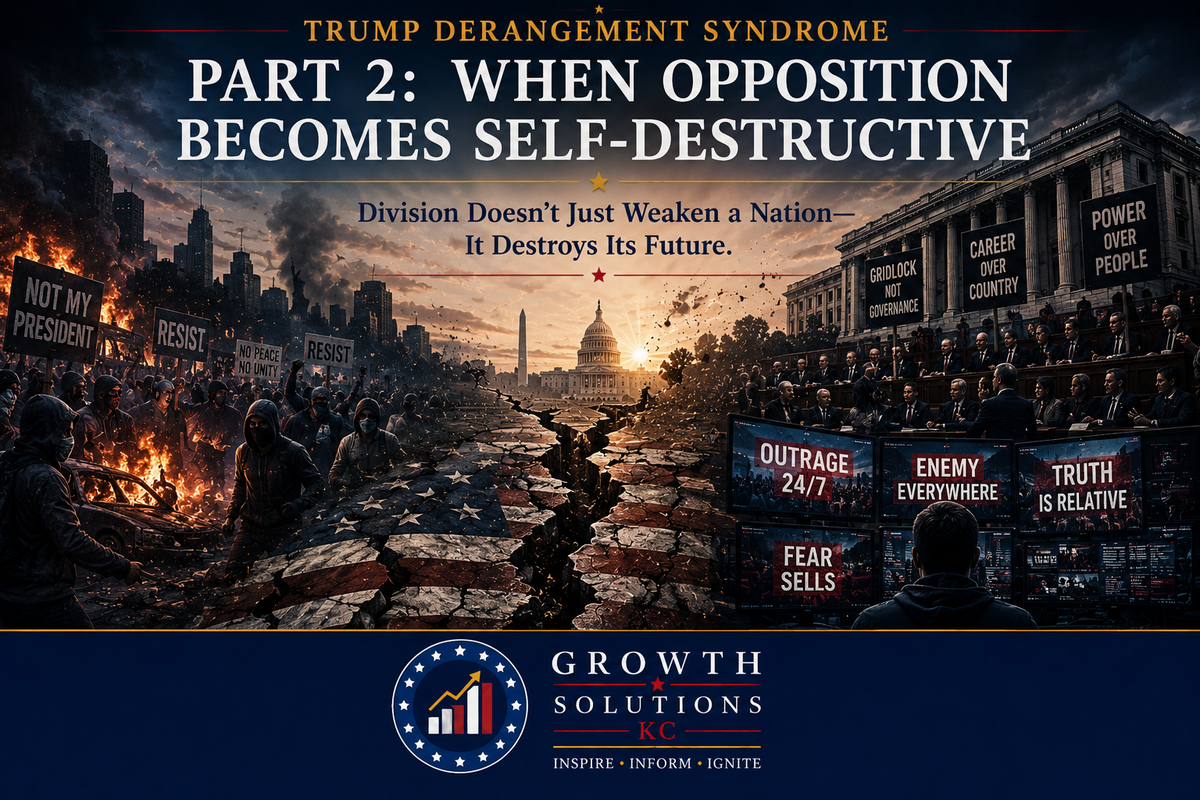
Disliking a political leader is normal.
It has happened throughout American history. Americans criticized George Washington, Abraham Lincoln, Franklin Roosevelt, Ronald Reagan, George W. Bush, Barack Obama, Donald Trump, and nearly every president in between.
Political disagreement is not only expected in a constitutional republic — it is necessary.
But something different happens when opposition evolves into a desire to see the country itself struggle simply because a political opponent might receive credit for success.
When Partisanship Overrides Patriotism
In recent years, America has witnessed a troubling cultural shift.
Increasingly, some political discourse appears driven not by a desire to improve the nation, but by a desire to ensure political opponents fail — even if national interests suffer in the process.
You can see it in moments where:
- Economic growth is dismissed because the “wrong” administration is in office,
- Diplomatic breakthroughs are minimized for partisan reasons,
- Border security concerns are treated primarily as political weapons,
- Or military success becomes secondary to political narratives.
That mindset is deeply unhealthy for any nation.
The “Quarterback” Problem
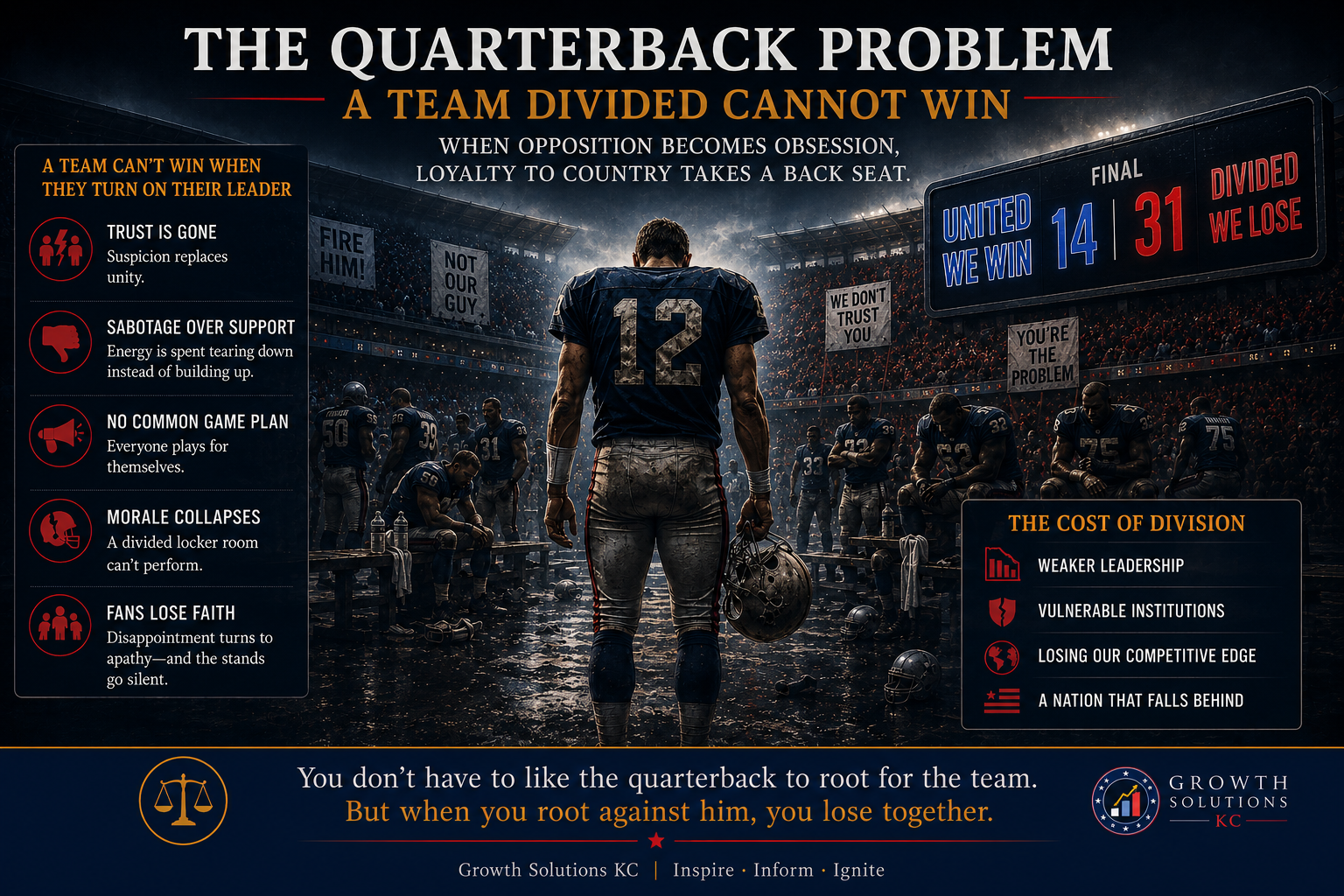
Imagine a football team where certain players dislike the quarterback so intensely that they secretly hope he fails.
Not because failure helps the team.
Not because failure improves the organization.
But because personal resentment matters more than collective success.
No serious organization could survive under those conditions.
The locker room would fracture.
Trust would collapse.
The team would become incapable of functioning cohesively.
A nation operates similarly.
Presidents are temporary.
Political parties rise and fall.
But the country itself — its institutions, economy, military, communities, and future — must remain larger than any single personality or administration.
The Rise of Nihilistic Politics
One of the most dangerous developments in modern politics is the normalization of nihilistic thinking.
Nihilistic politics does not ask: “How do we strengthen the country?”
Instead, it asks: “How do we damage the other side?”
That shift changes everything.
Under this mindset:
- Institutional trust becomes expendable,
- Economic pain becomes politically useful,
- Public fear becomes leverage,
- and National division becomes profitable.
The result is perpetual outrage culture — a system where anger is rewarded, compromise is punished, and emotional escalation becomes the primary engine of political engagement.
Social media amplifies it.
Cable news monetizes it.
Political activists weaponize it.
And increasingly, ordinary Americans absorb it.
Why This Matters Beyond Politics
This issue extends far beyond Donald Trump.
Trump is ultimately a catalyst that exposed deeper fractures already forming within American society:
- Declining institutional trust,
- Collapsing civic dialogue,
- Media fragmentation,
- Ideological tribalism,
- And growing emotional polarization.
The danger is not merely political disagreement.
The danger is the erosion of a shared national identity.
Once that disappears, democratic stability weakens.
Civic Responsibility in a Constitutional Republic
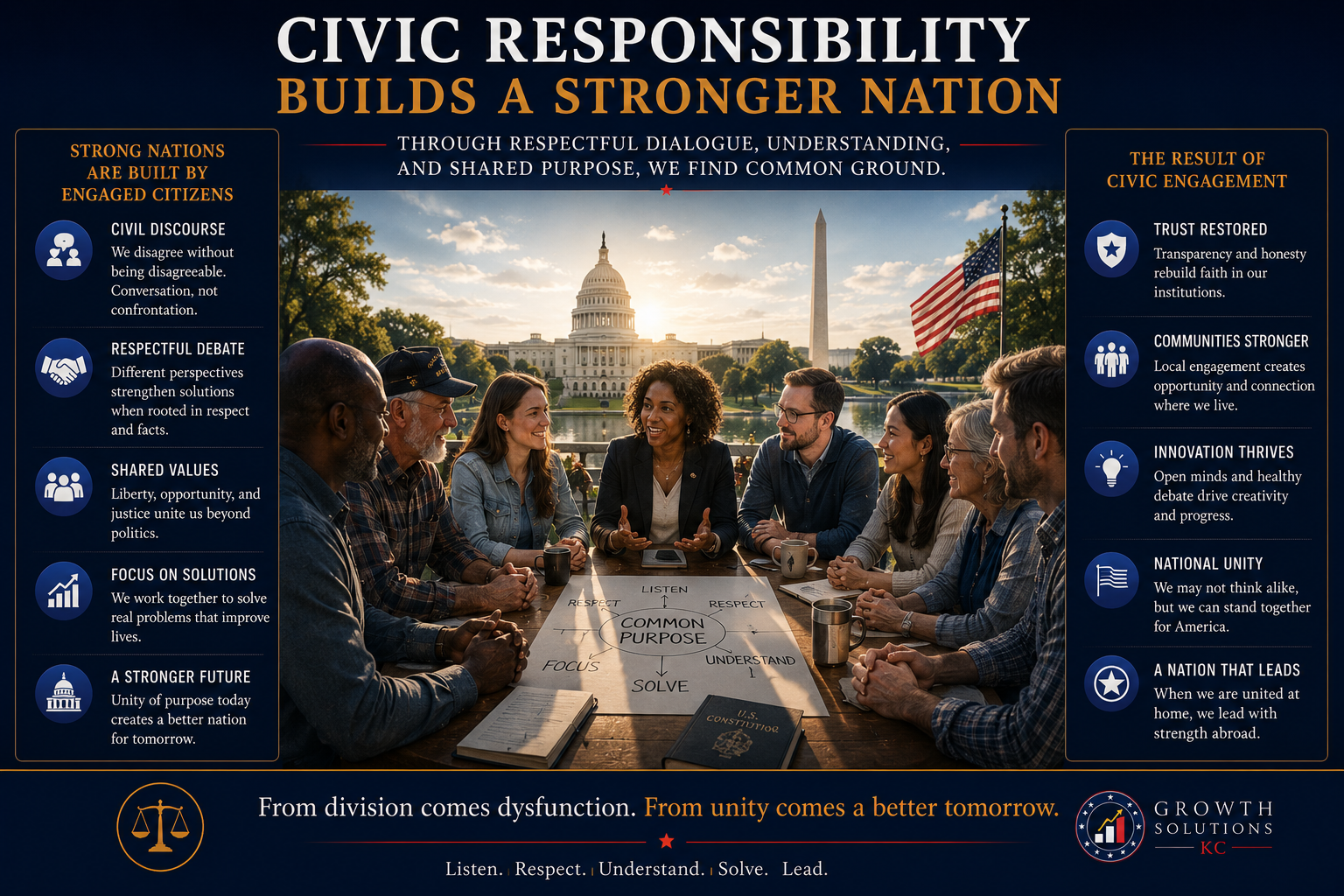
Citizens have every right to oppose policies, criticize leaders, protest decisions, and advocate for change.
That is part of American freedom.
But civic responsibility also requires perspective.
It requires recognizing that:
- national stability matters,
- institutional credibility matters,
- economic strength matters,
- military readiness matters,
- and social cohesion matters.
A mature society should be able to debate leadership without emotionally rooting for national decline.
What Matters
What matters is not whether Americans support or oppose Donald Trump.
What matters is whether political identity has become so emotionally dominant that it overrides civic responsibility, national perspective, and rational analysis.
What matters is another 250 years of American pride and exceptionalism.
Why It Matters
A nation cannot remain strong if large segments of the population begin viewing political opponents as enemies rather than fellow citizens.
When outrage becomes identity, division deepens and institutional trust collapses.
What Happens Next
If this trend continues, America risks becoming increasingly fragmented, reactive, and emotionally unstable politically.
Citizens will consume different realities, institutions will lose legitimacy, and constructive governance will become increasingly difficult.
The long-term consequence is not simply polarization — it is national exhaustion and civic decline.
What People Should Consider
Americans should reject the idea that political hatred is a substitute for citizenship.
We should debate vigorously.
Criticize honestly.
Defend principles consistently.
But we should also remember that national success benefits all Americans regardless of political affiliation.
Part 3: Next in the series: “How America Can Lower the Temperature” — Four steps to restore a culture that values truth, civic responsibility, and constructive disagreement. United we stand; Fractured we fall.
~ Matt Cucinotta | Growth Solutions KC | Inspire · Inform · Ignite


Comments ()