
Trump Derangement Syndrome | Part 1: When Politics Replaces Perspective
What happens when emotional tribalism overrides objective reasoning and civic cohesion.
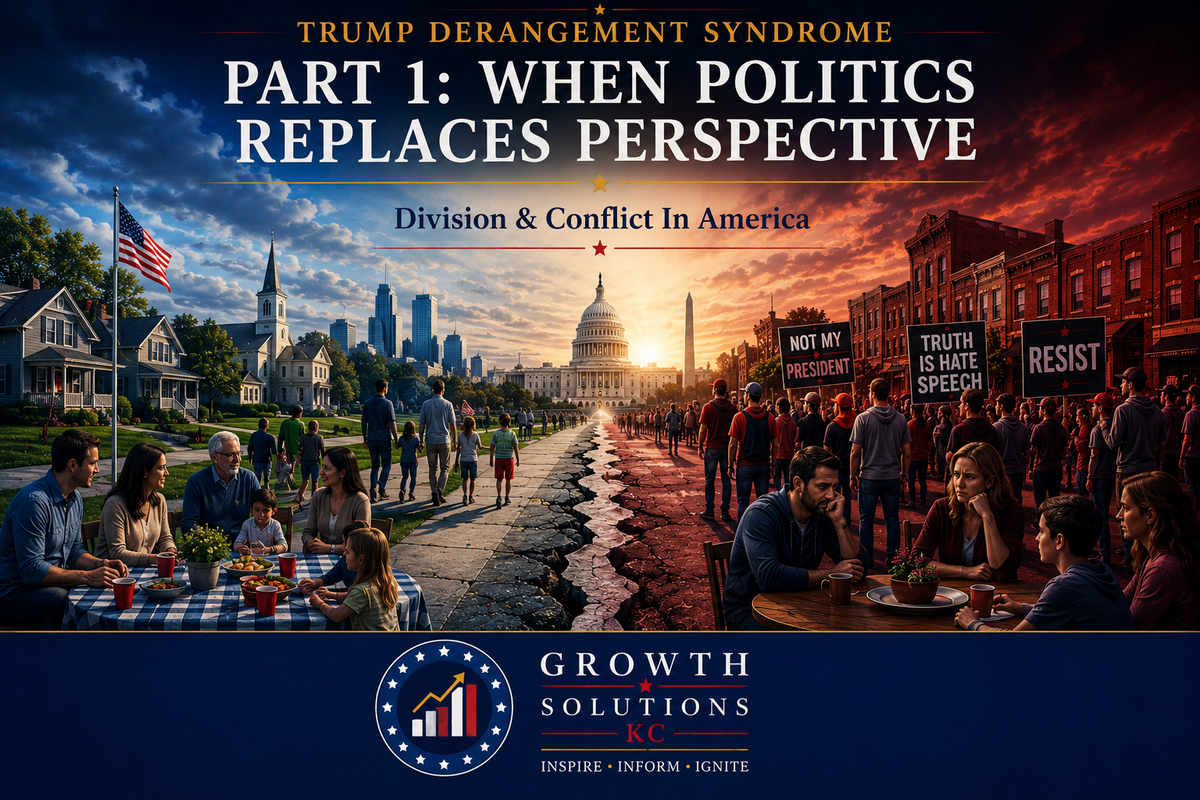
This is not ultimately about one man. It is about what prolonged political tribalism does to a society, its institutions, and its ability to reason clearly.
There is a growing cultural phenomenon in America that many people casually joke about, but few seriously examine: Trump Derangement Syndrome — often shortened to TDS.
The phrase is controversial. Some dismiss it as partisan rhetoric. Others use it too loosely. But beneath the political noise sits a deeper and more important question:
What happens when opposition to one political figure becomes so emotionally consuming that it overrides objectivity, consistency, and even national interest?
That is the real issue worth examining.
The Rise of Identity Politics Over Objective Standards
Healthy political disagreement is normal — and necessary.
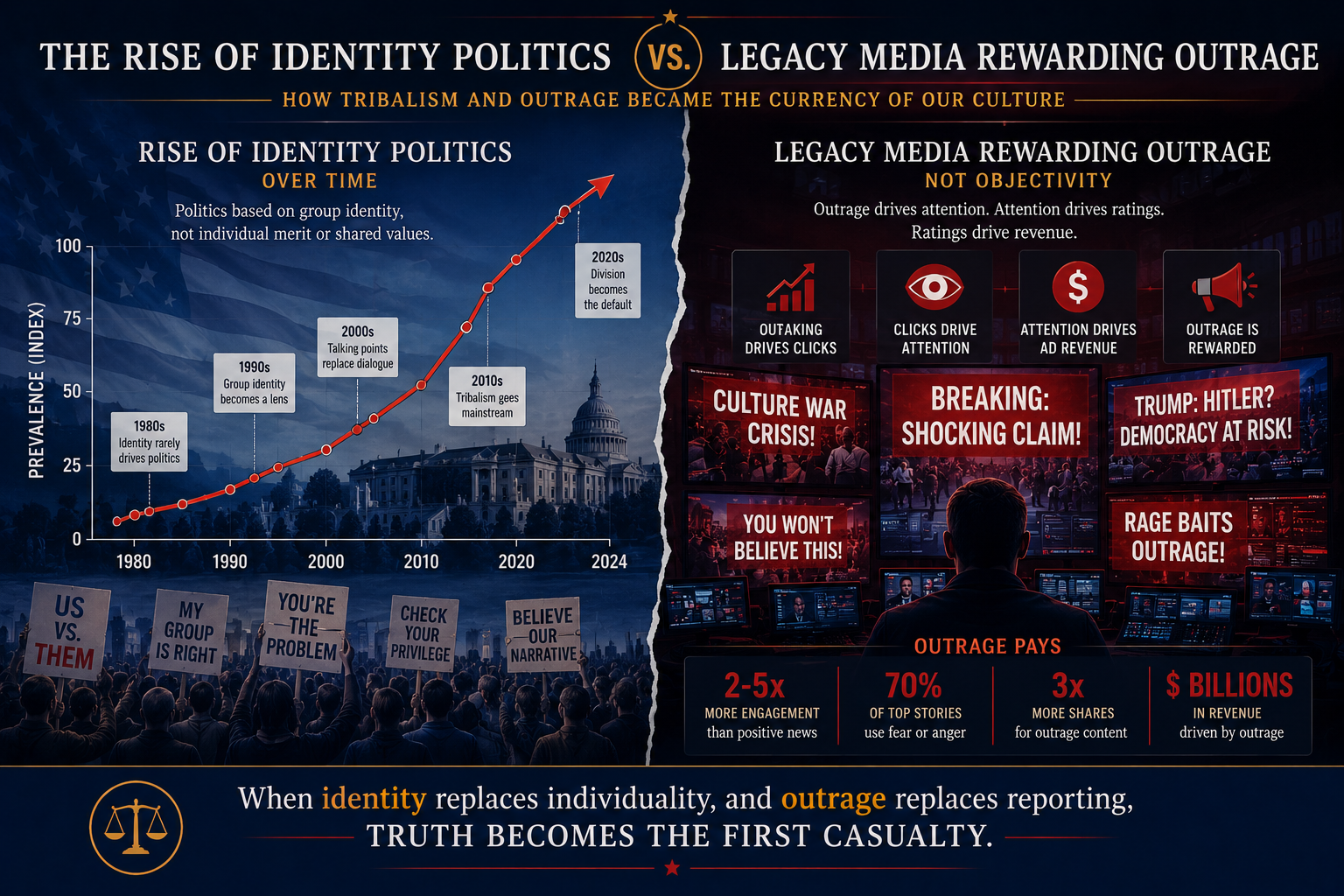
A functioning republic depends on competing ideas, rigorous debate, accountability, and open criticism of those in power. But something different has emerged in modern American culture: a reflexive opposition where policies, events, or outcomes are judged less by merit and more by whether they are associated with Donald Trump.
For many Americans, political analysis has increasingly become emotionally driven rather than principle driven.
The pattern often looks like this:
- If Trump supports border enforcement, border enforcement must automatically be immoral.
- If markets rise during a Trump administration, the success must be minimized or reframed negatively.
- If geopolitical tensions ease under Trump, the achievement must be ignored.
- If Trump opposes something, some feel compelled to support the opposite position regardless of previous beliefs.
This is not rational analysis. It is reactionary identity politics.
When Media Incentives Reward Outrage
Modern media ecosystems amplify emotional responses because outrage generates attention, engagement, and revenue.
Many legacy media organizations no longer operate primarily as neutral gatekeepers of information. Instead, large segments of political media now function as ideological ecosystems where confirmation bias is reinforced daily.
Americans increasingly consume information that validates emotional instincts rather than challenges assumptions.
The result is a population that often reacts before thinking.
Nuance disappears. Context disappears. Complexity disappears.
Every issue becomes existential. Every disagreement becomes moral warfare. Every political opponent becomes an enemy rather than a fellow citizen with different priorities or conclusions.
That environment is unhealthy for any republic.
The Institutional Cost
The deeper danger of TDS is not simply political hostility toward Trump himself.
The danger is what happens to national cohesion when millions of Americans begin viewing nearly every event through the lens of partisan hatred.
A society cannot function effectively if large portions of the population:
- hope economic indicators worsen for political advantage,
- root against diplomatic success,
- dismiss institutional victories because the “wrong” leader receives credit,
- or interpret every event through permanent outrage.
Once political identity becomes stronger than civic identity, institutions weaken.
Trust erodes.
Shared reality disappears.
The Psychological Component
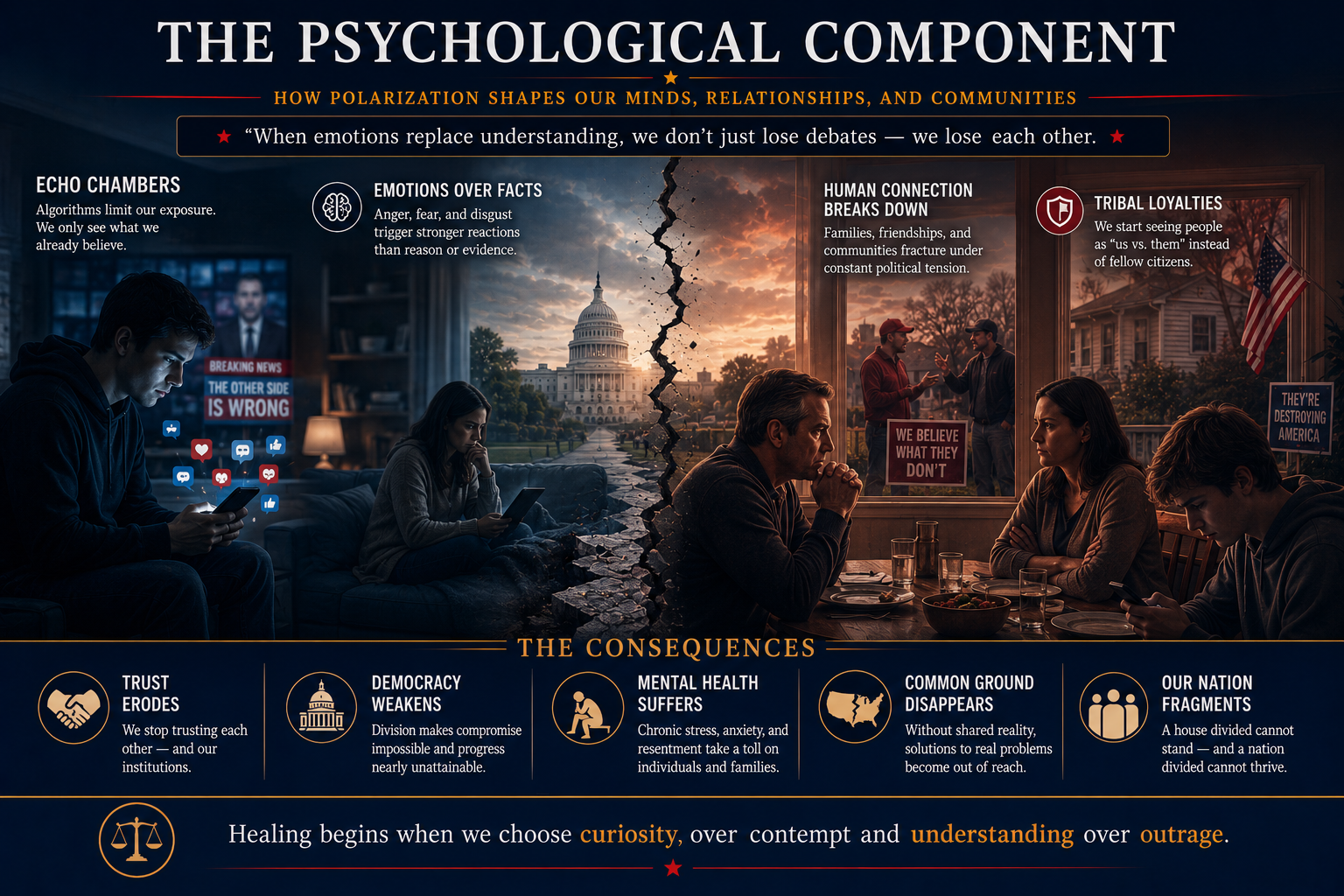
At its core, TDS reflects something broader than politics: emotional over-identification.
People naturally attach identity to movements, leaders, and belief systems. But when emotional attachment becomes absolute, objectivity suffers.
That creates a dangerous feedback loop:
- Political identity becomes personal identity.
- Criticism feels like a personal attack.
- Emotional reactions replace evidence-based reasoning.
- Institutions reward outrage and polarization.
- Society grows increasingly fragmented.
This cycle affects media, academia, entertainment, corporations, and even everyday relationships.
The Real Question
The central question is not whether someone supports or opposes Donald Trump. Reasonable people can disagree strongly about his policies, rhetoric, leadership style, or political legacy.
The more important question is this:
Can citizens criticize leaders without rooting against the country itself?
Can people debate policy without abandoning shared standards of truth, fairness, and national interest?
Those questions matter far more than any single election cycle.
Why This Conversation Matters
Growth Solutions KC exists to examine trends, risks, incentives, and emerging shifts shaping society.
TDS is worth discussing not because political opponents should be silenced, but because emotional extremism — from any direction — weakens a nation’s ability to think clearly.
A strong republic requires:
- rational debate,
- intellectual consistency,
- institutional trust,
- civic maturity,
- and the ability to disagree without societal collapse.
When politics becomes pure emotional warfare, everyone loses.
Why It Matters
A republic depends on shared reality, civic maturity, and the ability to reason together despite disagreement.
When outrage replaces objectivity:
- institutions weaken,
- public trust erodes,
- media incentives become increasingly toxic,
- and national cohesion begins to fracture.
No society can function effectively when millions of people are conditioned to interpret every success as failure simply because of who occupies office.
What Happens Next
If this pattern continues unchecked, America risks becoming a nation permanently trapped in emotional polarization — where citizens no longer view political opponents as fellow Americans, but as enemies to defeat at all costs.
That path leads to deeper division, institutional instability, and growing civic distrust.
What People Should Consider
Americans do not need to agree on every policy, politician, or political movement.
But we do need:
- intellectual consistency,
- honest debate,
- shared standards of truth,
- and a renewed commitment to putting the country above partisan emotion.
Final Thought
America does not need less debate.
It needs better debate.
It needs citizens capable of separating emotion from analysis, outrage from evidence, and partisan loyalty from objective reality.
Because once a society loses the ability to think clearly together, it eventually loses the ability to govern itself effectively.
And that is a far greater threat than any one politician could ever be.
Next in the series: “The Quarterback Problem” — why rooting for national failure to defeat a political opponent ultimately damages everyone on the field.
~ Matt Cucinotta | Growth Solutions KC | Inspire · Inform · Ignite



Comments ()