

The Leader's Compass: Building a Personal Philosophy That Guides Every Decision
Leadership feels easy when conditions are stable, people agree, and outcomes are predictable. The true test comes when pressure rises, criticism intensifies, and difficult decisions carry real consequences for the people depending on you.
Leadership is rarely tested in a vacuum. From parents guiding a family to public servants shaping a community, from entrepreneurs building a business to coaches developing the next generation — true leadership is tested daily in the choices we make and the people we serve.
Yet, many leaders operate purely on instinct, reacting to crises as they arise rather than steering from an anchored set of non-negotiable principles. To earn deep trust, inspire those around you, and build a lasting legacy — at any level of life — instinct alone is not enough. You need a defined, actionable, personal leadership philosophy.
A Framework for Effective Leadership
At its core, leadership is the ability to influence others through service, belief, and a shared commitment to purpose. Effective leaders lead by example — ensuring their teams are informed, prepared, and empowered to reach their full potential. They prioritize the growth and well-being of others, recognizing a fundamental truth: when individuals thrive, the team excels.
True leaders take full, uncompromising ownership of their team’s actions and outcomes — celebrating collective successes while personally accepting responsibility for setbacks. Character is never revealed when times are easy; it is forged in how we respond to adversity, how we view failure as an opportunity to grow, and what we are willing to sacrifice for those who depend on us.
Ultimately, leadership is the force that transforms a group of disconnected individuals into a cohesive, high-performing, purpose-driven team — whatever form that team may take.
The Four Pillars of Principled Leadership
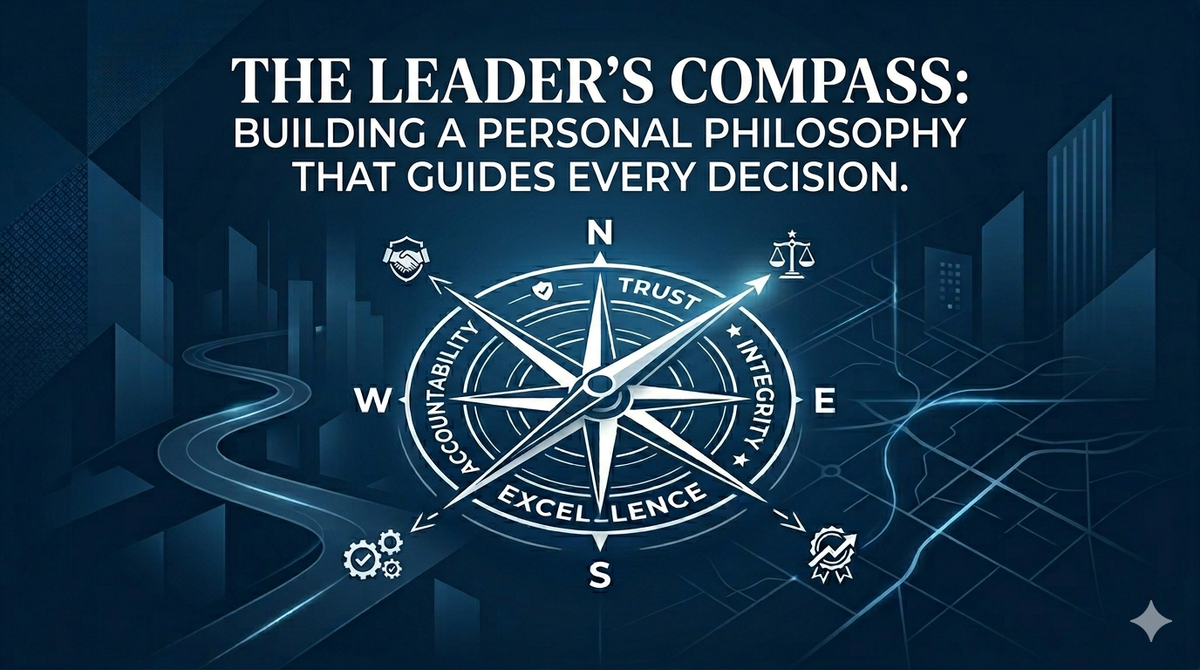
Regardless of the arena — family, community, business, or public service — the most enduring leaders anchor themselves to the same foundational values. These are not situational preferences — they are foundational principles. They are pillars that hold firm under pressure.
1. Radical Trust
Trust is earned in moments when doing the right thing carries a cost.
- The Principle: Do what's right.
- The Application: Trust is the bedrock of every meaningful relationship and every functioning institution. We earn and maintain it by making ethical decisions, remaining consistent in our actions, and doing what is right — even when it is difficult, inconvenient, or costly in the short term. A leader without trust is simply someone giving directions no one is following.
2. Uncompromising Integrity
Integrity is alignment between private behavior and public conviction.
- The Principle: Lead with honesty and principle.
- The Application: High moral standards, transparency, and total alignment between words and actions are non-negotiable. Integrity means standing firm in your core values even under pressure — financial, social, or political. It means your private choices reflect your public commitments. There is never a right time to do the wrong thing. When in doubt, choose integrity.
3. A Culture of Excellence
Excellence is not perfection — it is disciplined consistency.
- The Principle: Pursue the highest standards.
- The Application: Committing to doing everything to the best of your ability sets a benchmark that inspires others. Excellence is not an unattainable standard of perfection — it is a daily mindset of continual growth, iron discipline, and personal pride.
4. Absolute Accountability
Accountability begins where excuses end.
- The Principle: Own the outcome.
- The Application: True leaders take full responsibility for their decisions, their actions, and the ultimate performance of those they lead. Accountability means no blame, no excuses, and a consistent commitment to delivering on your word. The culture around you will mirror the accountability you model.
Three Commitments: Bringing the Philosophy to Life
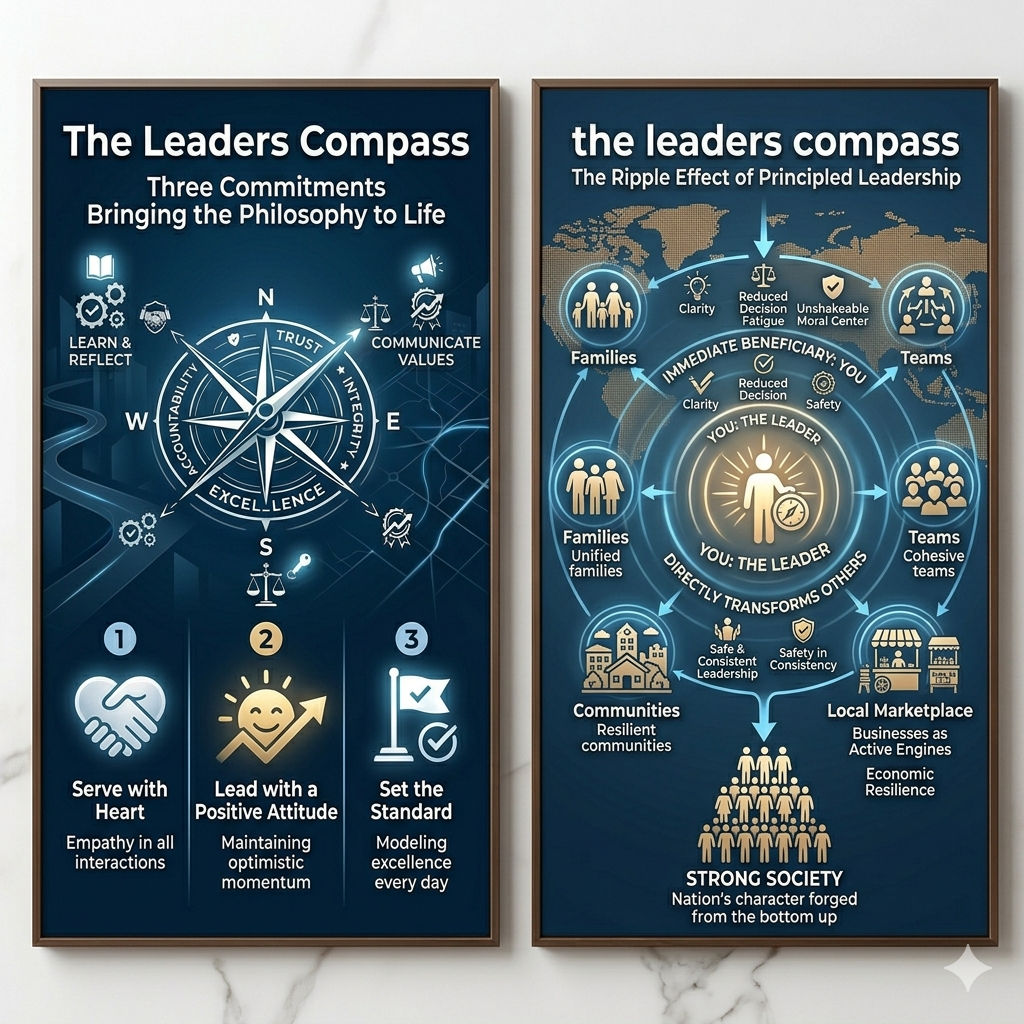
Knowing your values is only the beginning. Living them out requires daily commitment. Here are three practices that translate philosophy into action:
- Serve with Heart: Approach leadership with humility and a genuine desire to support and elevate others before yourself. Whether you’re raising children, running a team, or serving a community, the leader who puts others first builds the deepest loyalty and the most lasting impact.
- Lead with a Positive Attitude: Attitude directly shapes the culture around you. Attitude is contagious. Leaders either transfer confidence and composure — or anxiety and instability. A resilient, solution-focused mindset is contagious — it lifts those you lead even in the hardest seasons.
- Set the Standard: The most powerful leadership tool you have is your own behavior. People want to be associated with those who set and maintain high standards. Model the exact conduct, effort, and values you expect from those around you. You cannot ask of others what you are unwilling to demonstrate yourself.
The Ripple Effect of Principled Leadership
The true measure of a leadership philosophy is found in its ripple effect. When you take the time to clearly define and live by a personal compass, the immediate beneficiary is you — you gain clarity, reduce decision fatigue, and build an unshakeable moral center.
But it does not stop there. That clarity directly transforms others. The people you lead no longer have to guess your intentions; they find safety in your consistency. Families become more unified. Teams become more cohesive. Communities become more resilient.
When small businesses and franchises are guided by leaders of uncompromised principles, the community thrives. Trust is restored to the local marketplace, economic resilience is built from the ground up, and businesses become active engines for community well-being.
Strong communities are the bedrock of a strong society. A nation’s moral and civic character is not built from the top down — it is forged from the bottom up, one household, one community, one organization, one leader at a time.
Do not leave your leadership to chance. Take ownership of your principles, write down your philosophy, and build a legacy that elevates everyone around you. The future strength of our families, organizations, communities, and institutions depends on leaders willing to stand firmly on principle when it matters most.
When you are ready to transition to purpose-driven leadership, establishing your own written compass is the vital first step. The following foundational resources offer exceptional frameworks.
🔹The Leader's Compass (3rd Edition) — Ed Ruggero & Dennis F. Haley. A practical manual for writing your own leadership philosophy and maintaining a clear moral center under organizational pressure.
🔹The Difference Maker — John C. Maxwell. A blueprint for mastering your mindset and understanding how attitude shapes culture and resilience in those you lead.
🔹The Personal Leadership Philosophy Blueprint — Online Tool. A practical digital worksheet that helps you assess your values, set clear boundaries, and define your commitments.
🔹The US Army Leadership Philosophy Guide — Online Tool.
Battle-tested open-source templates from military leadership schools for building a structured, principle-driven personal philosophy.
~ Matt Cucinotta | Growth Solutions KC | Inspire · Inform · Ignite



Comments ()