

Energy Policy Has Consequences: California’s Energy Reality Check
California’s Gas Price Crisis was Created by Policy. When government reduced domestic energy resilience, it increased dependence on unstable foreign markets instead. Energy independence is an economic and strategic advantage.
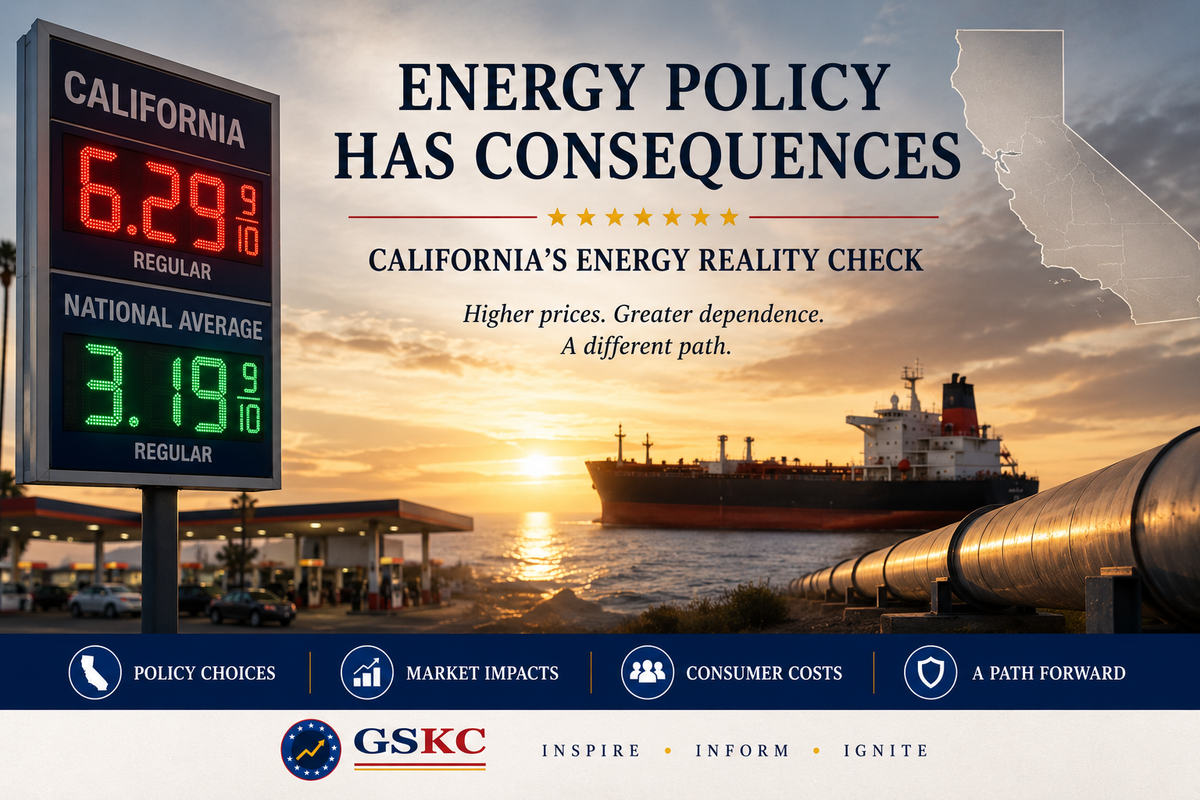
🔹 California pays consistently higher gas prices because of policy choices — not just global events.
🔹 High taxes, regulations, and import reliance raise costs for families and businesses.
🔹 Energy policy affects everything from food prices to transportation and manufacturing.
🔹 Limited pipelines and declining domestic production increased dependence on foreign oil.
🔹 If California recommits to energy stability and domestic production, the benefits will extend far beyond the state.
California’s Gas Price Crisis Wasn’t Created Overseas; it was created by policy.
Every time gas prices spike, Americans hear the same explanations:
Iran. Iraq. Middle East tensions. Israel/Hamas conflict. OPEC production cuts. Ukraine/Russia war. Washington DC politics. Presidential politics. And more...
Those factors absolutely influence global oil markets. But they are not the primary reason Californians consistently pay some of the highest fuel prices in America.
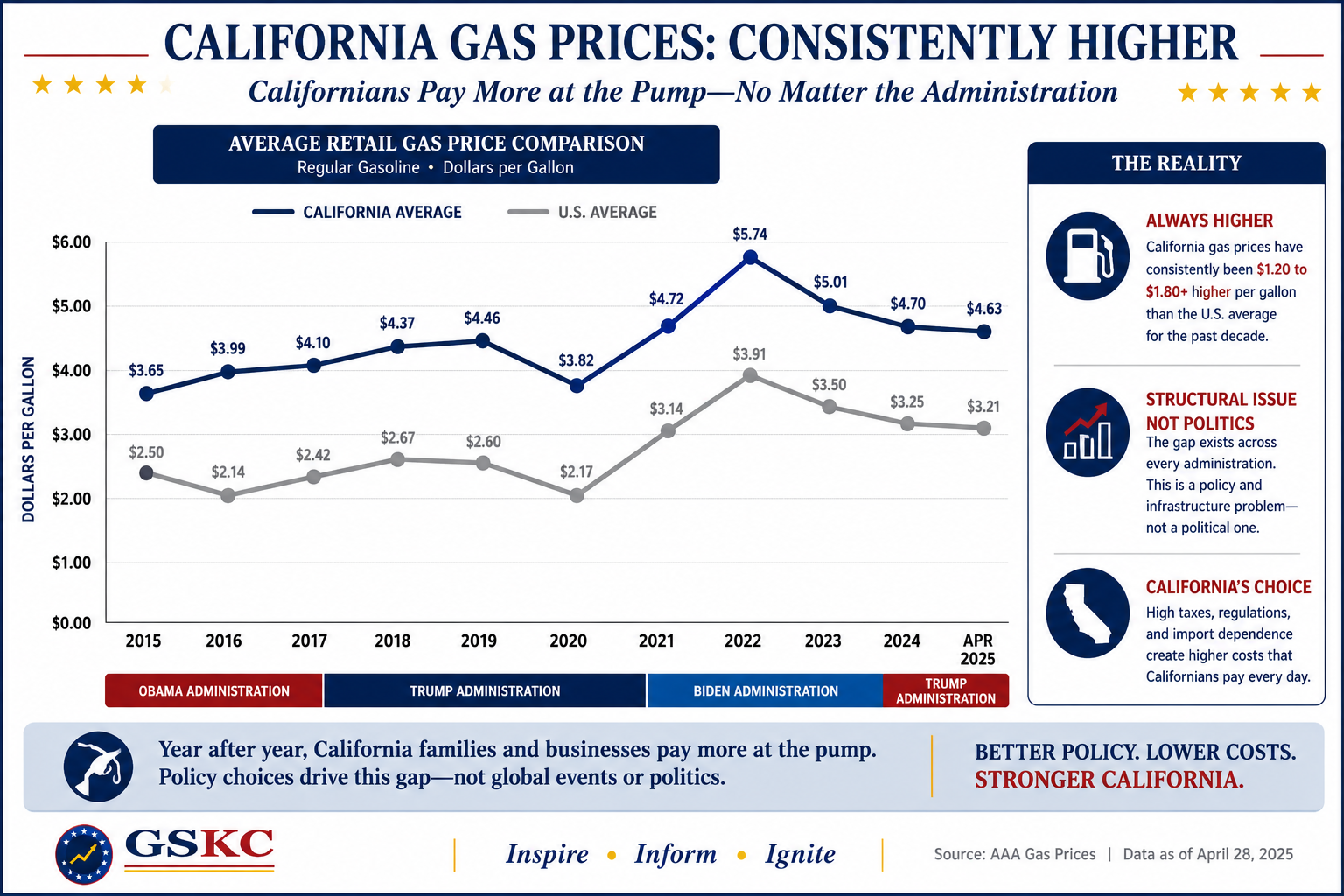
The deeper issue is structural — driven by decades of state energy policy decisions and self-inflicted infrastructure limitations.
Many Americans do not realize the United States became largely energy independent in recent years through expanded domestic production, pipeline infrastructure, and North American energy development. Much of the country benefits from relatively stable access to oil produced in the U.S. and Canada.
California Chose a Different Path
While the United States has become one of the world’s leading energy producers, California has steadily reduced in-state oil production, restricted offshore drilling, opposed pipeline expansion, increased refinery pressure, and implemented some of the nation’s highest taxes and regulatory costs. The difference is not geography alone. It is policy direction.
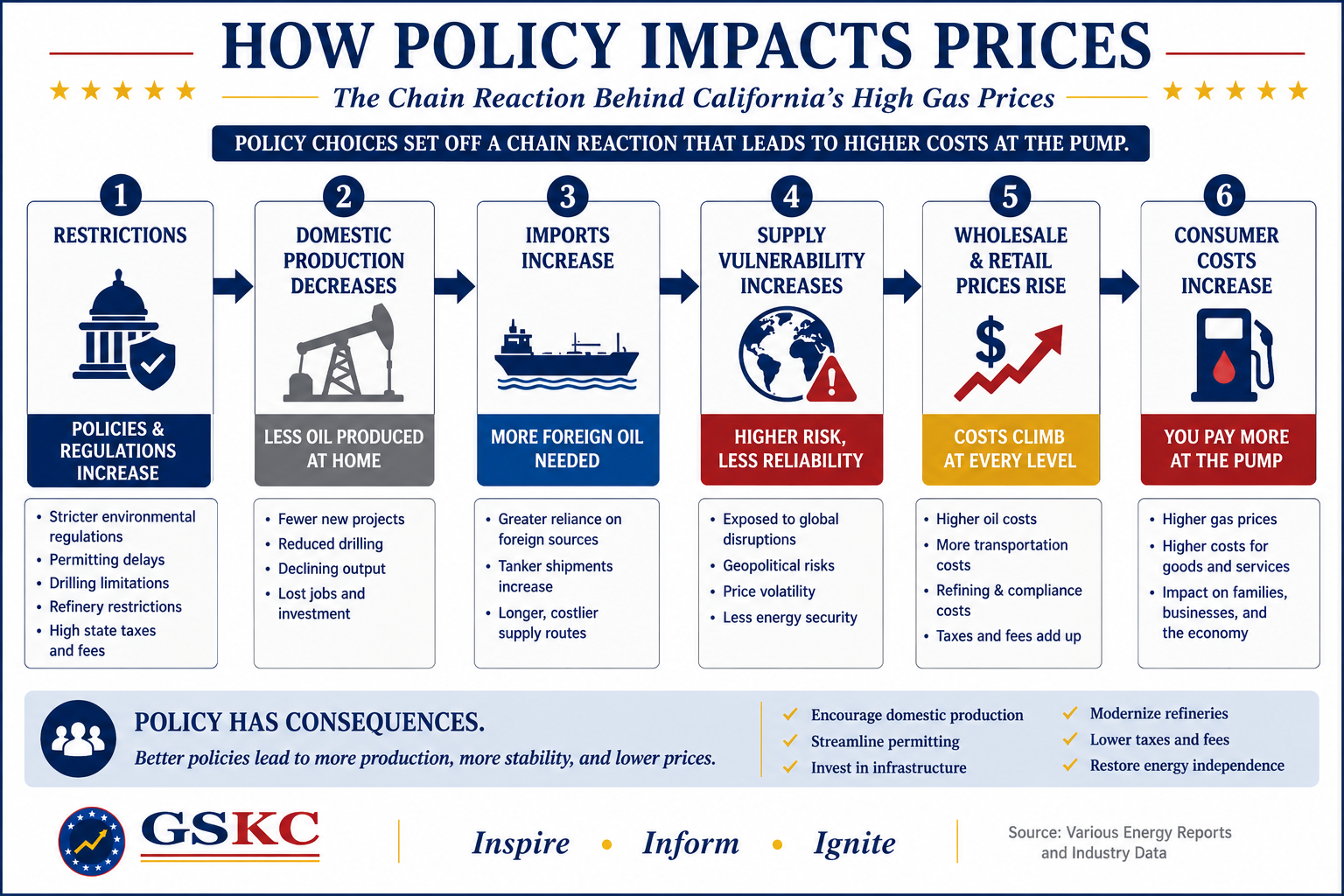
For years, California has pursued an energy strategy built on aggressive regulation, restricted domestic production, refinery limitations, environmental mandates, and heavy taxation — while simultaneously increasing dependence on imported foreign oil.
Compounding the issue, several refineries have closed or announced plans to cease operations due to mounting regulatory pressure and declining long-term investment viability. Combined with some of the nation’s highest gas taxes — estimated between $1.30 and $1.50 per gallon — consumers feel the impact almost immediately.
California consumers have absorbed the cost through:
- Higher gas taxes
- Specialized fuel requirements
- Reduced refinery flexibility
- Increased transportation expenses
- Foreign import dependence
- Regulatory compliance costs
And the impact goes far beyond the gas pump. Energy costs influence nearly everything in modern life:
- Food prices
- Shipping costs
- Manufacturing
- Construction
- Utilities
- Clothing
- Air travel
- Emergency services
- Small business operations
None of this means environmental stewardship should be abandoned. Conservation, innovation, and cleaner technologies all matter. But successful policy requires balance between environmental goals and economic reality.
Ultimately, consumers pay the price when ideology overtakes infrastructure, production, and practical reality.
Today, California is often described as an “energy island.”
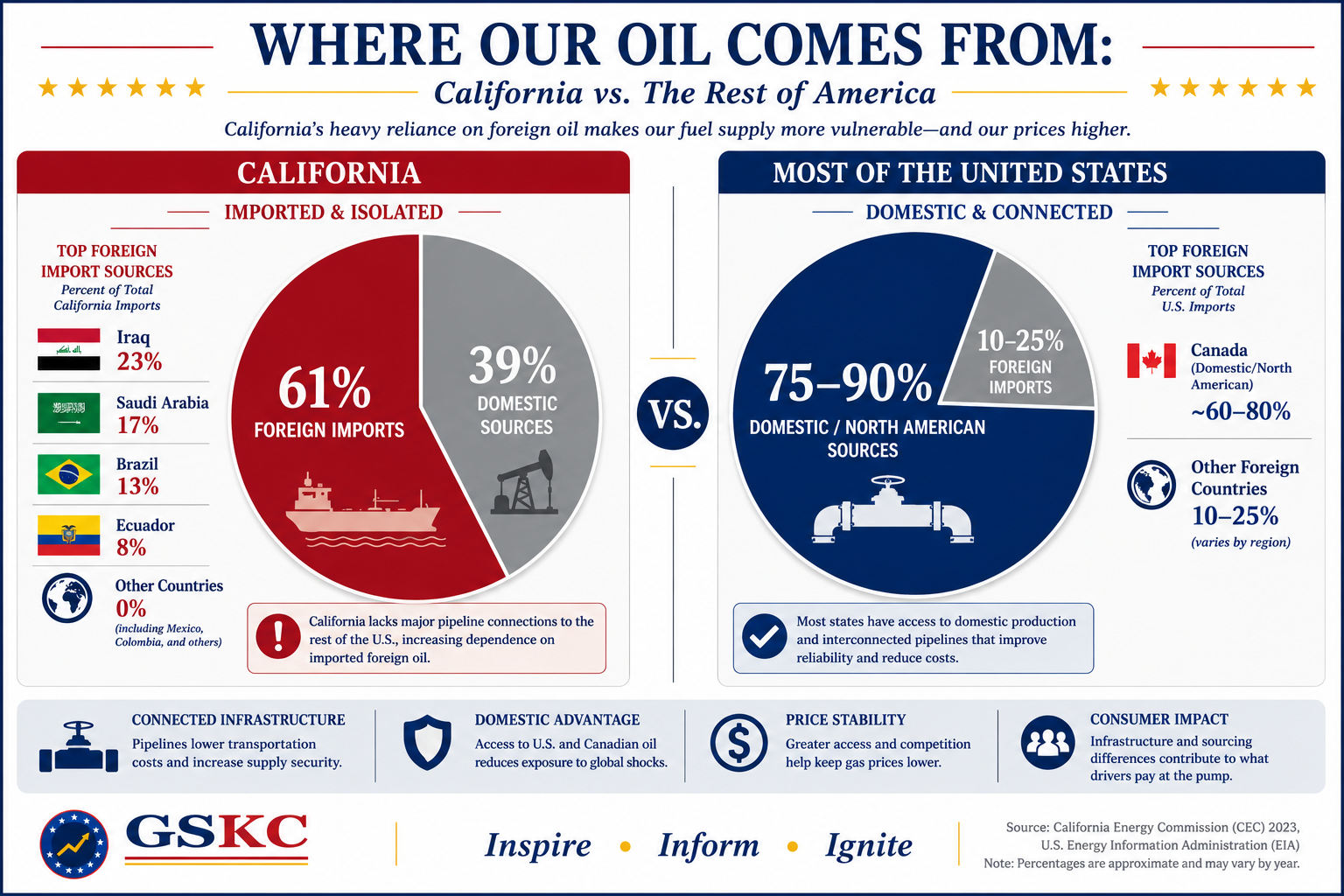
Unlike much of the country, California lacks major pipeline connections to broader U.S. energy infrastructure. As a result, the state depends heavily on imported foreign crude oil to keep refineries operating.
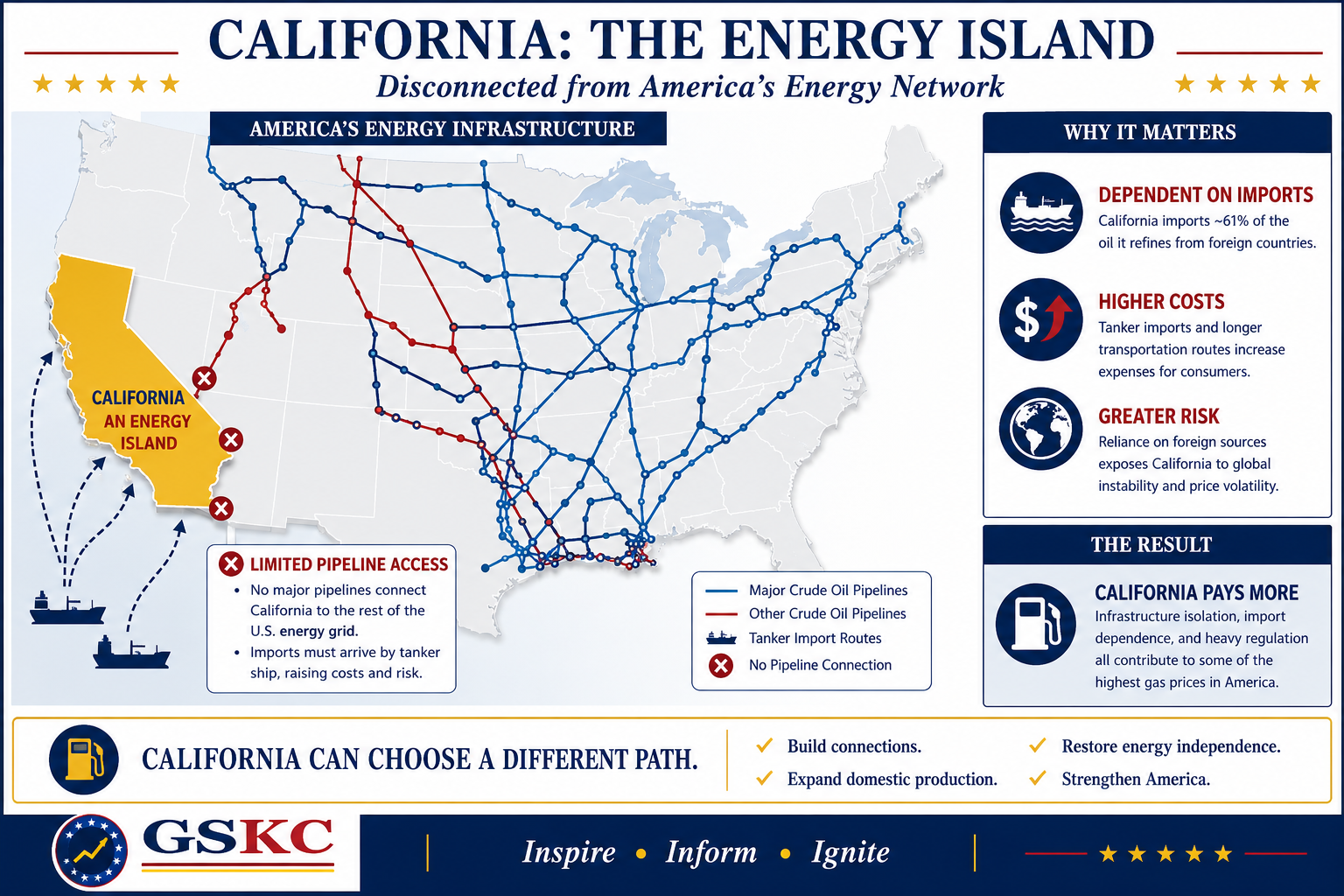
Recent estimates suggest approximately 61% of the oil refined in California is imported from foreign countries including Iraq, Saudi Arabia, Brazil, and Ecuador.
When instability erupts in the Middle East or global shipping markets tighten, California is far more vulnerable to supply disruption and price spikes because it has deliberately limited its own flexibility and infrastructure.
Meanwhile, other states rely heavily on domestic production and integrated North American pipeline systems that improve energy stability and lower transportation costs.
That distinction matters.
California’s experience offers an important lesson for the nation:
When governments reduce domestic energy resilience without sufficient replacement infrastructure, they often increase dependence on unstable foreign markets instead.
Energy independence is not merely an economic issue. It is a strategic advantage.
There is a path forward.
Policies that encourage responsible domestic production, modernize pipeline infrastructure, restore refinery and offshore investment, reduce excessive regulatory burdens, and lower fuel taxes can strengthen both state and national energy security.
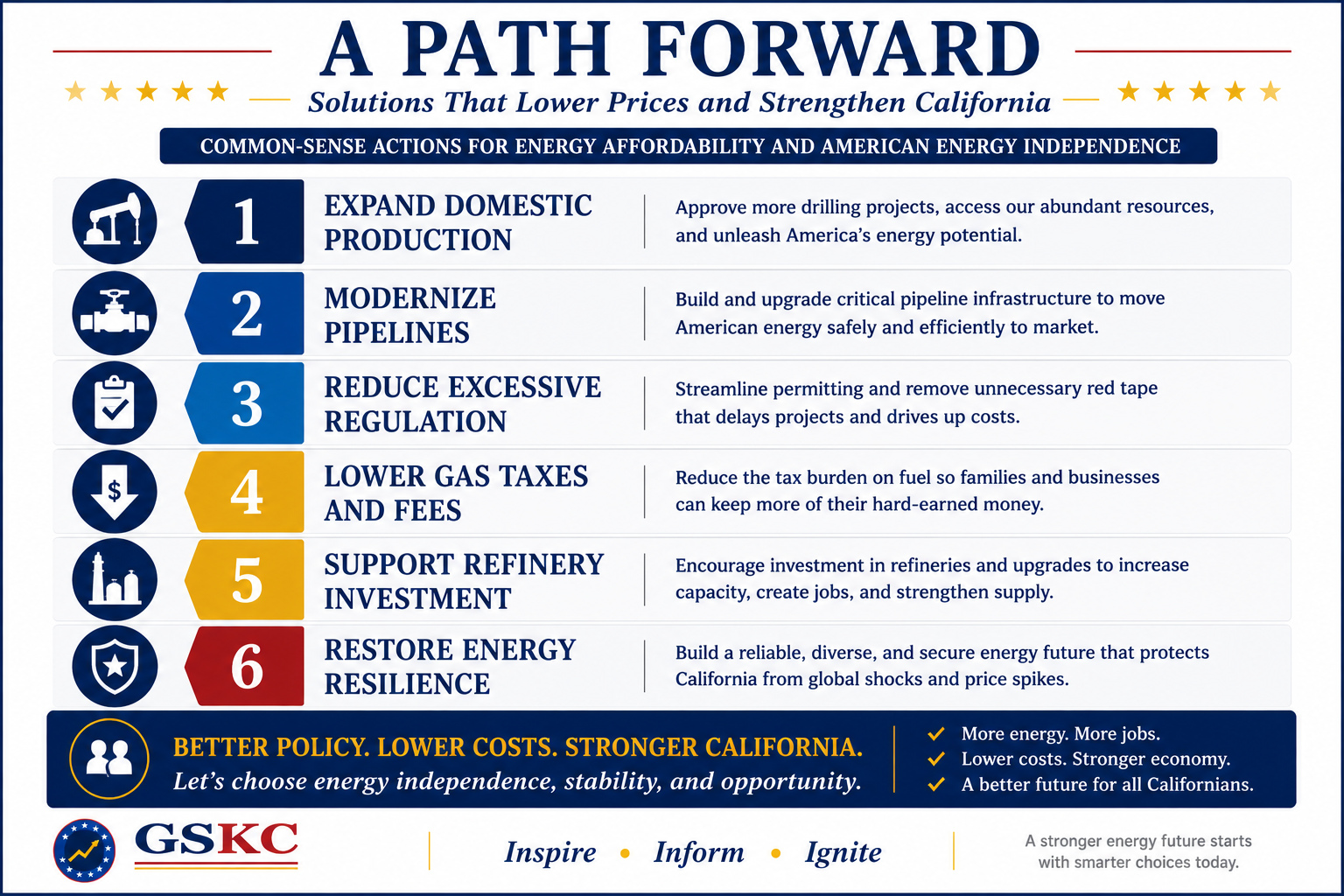
California does not have to remain an energy island.
And if the nation’s largest state recommits to energy stability and domestic production, the benefits would extend far beyond California — helping stabilize prices, strengthen supply chains, and support long-term American energy independence.
Affordable and reliable energy is not merely a political issue. It is an economic foundation.
An informed public is critical — because eventually, every policy decision reaches the kitchen table.
~ Matt Cucinotta | Growth Solutions KC | Inspire · Inform · Ignite


Comments ()