

The Chiefs’ New Home: What Kansas City Is Building
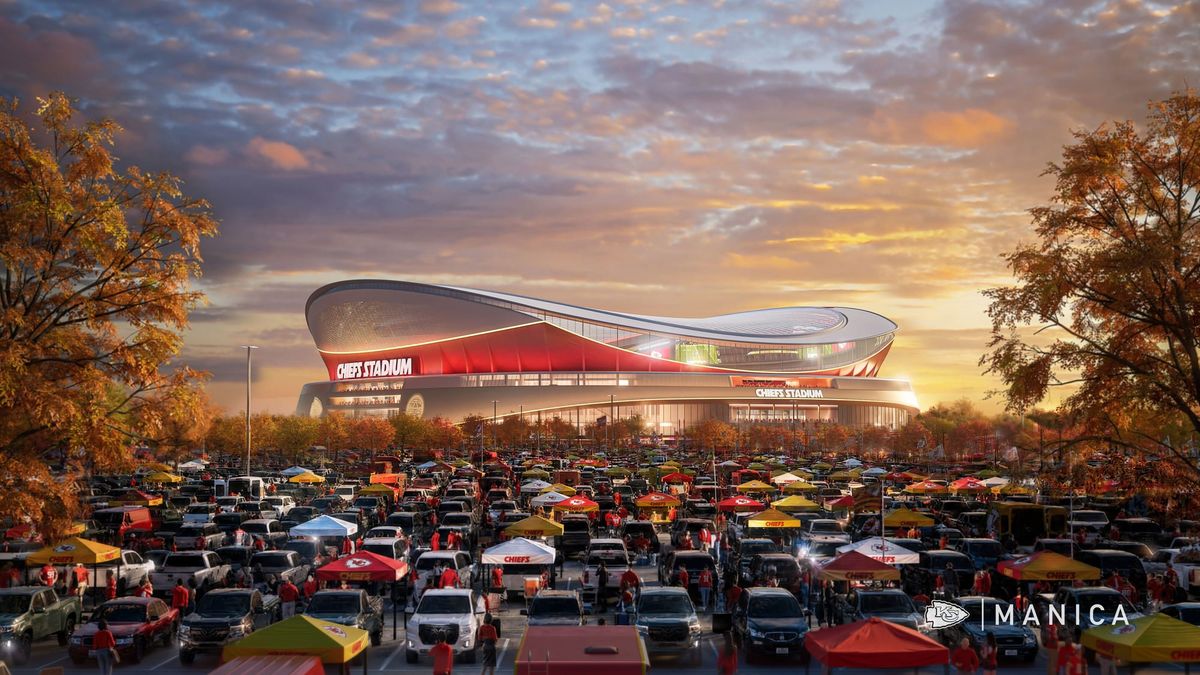
The Chiefs’ Next Chapter: A stadium, a team headquarters, and two surrounding districts—understanding the project before weighing the deal.
The Stadium, the Deal, and the Community • Part I of III • Facts checked September 8, 2026
A Chiefs game can be a family reunion, a weekly ritual, or a memory that lasts long after the final whistle. For fans who associate those experiences with Arrowhead, a new stadium brings an understandable mixture of anticipation and loss. The attraction of a modern venue can exist alongside affection for the place where those memories were made.
That emotional connection is part of this story. So are the buildings, the businesses planned around them, and the public resources involved. Understanding the project begins with seeing how those pieces fit together.
Kansas and the Chiefs announced their agreement in December 2025: a new stadium in Wyandotte County, a headquarters and training facility in Olathe, and development around both locations. The intended stadium opening is the 2031 NFL season. The team would move across the state line while remaining in the Kansas City metropolitan area. [1]
For residents, the useful starting point is straightforward: what exactly is being built, how would it function, and which details are still taking shape?
How we reached this point
The move followed the rejection of a Jackson County sales-tax measure in 2024 that would have supported an Arrowhead renovation and a new Royals ballpark. The Chiefs subsequently pursued the Kansas project. Under the announced transition, they plan to continue playing at Arrowhead through the 2030 season. [7]
That history explains the starting point without settling the questions raised by the new proposal. A decision about renovating an existing stadium and a decision about building a new stadium with surrounding development involve different facilities, costs, and expectations. The current project needs to be understood on its own terms.
One project, three components
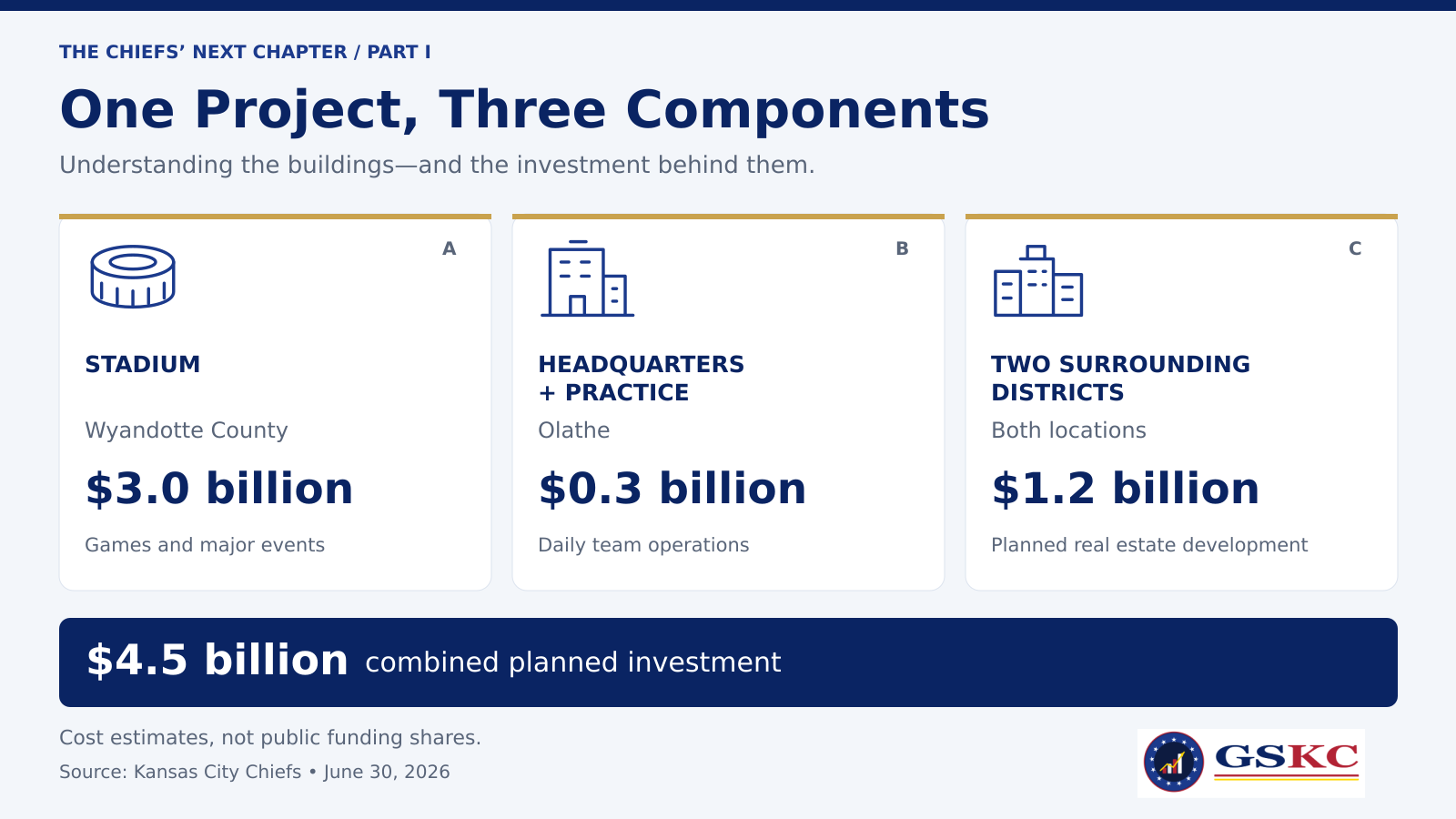
The stadium attracts the attention, but the broader plan has three main components: the game-day venue, the team’s daily workplace, and the real estate districts around both.
The Chiefs’ June 2026 breakdown puts the combined capital investment at $4.5 billion: $3 billion for the stadium, $300 million for the headquarters and practice facility, and $1.2 billion for surrounding real estate development. These are project investment estimates, not a statement of the public share or a calculation of economic benefits. [2]
The Olathe facility is planned near College Boulevard and Ridgeview Road. Its approximately 155-acre site includes the associated mixed-use development. Populous is designing the headquarters and training facility and helping plan the surrounding district. The team identifies 2031 as its opening target. [4]
This is the day-to-day side of the relocation: a workplace for players, coaches, football operations, and business staff. Distinguishing that role from the stadium helps explain why the project extends across two communities.
The surrounding development adds another layer. On August 31, the Chiefs and Hunt Midwest announced Two-Point Development as master developer for both districts. Their stated plans include entertainment, hospitality, retail, residential uses, and public gathering spaces. Specific businesses and the timing of individual openings will determine how that vision takes shape. [5]
What fans would see
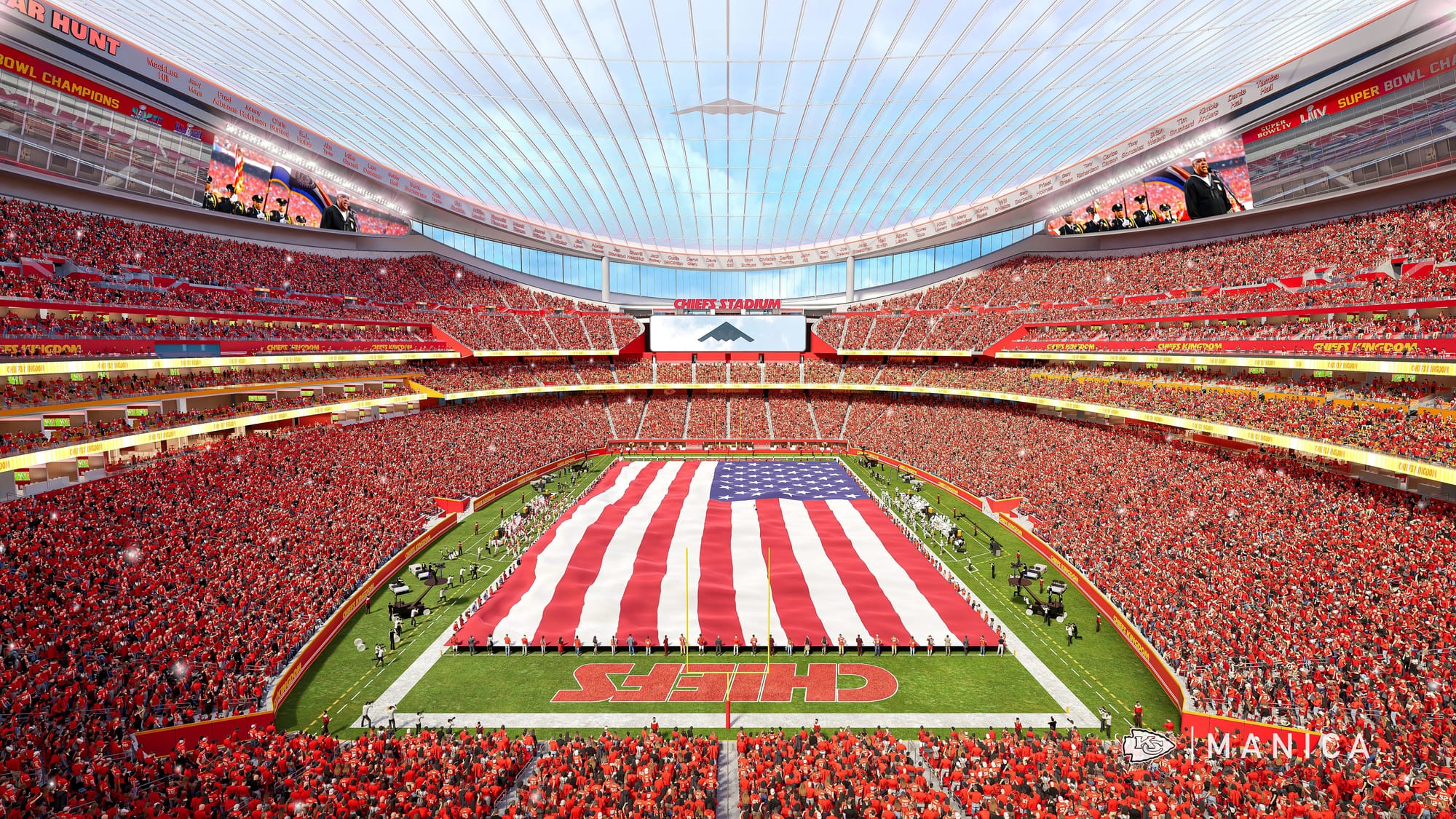
The July concepts show a fully enclosed stadium with approximately 70,000 seats, a translucent roof, and more than 20,000 parking spaces. MANICA is the lead designer, with HNTB serving as architect of record. [3]
The design carries recognizable elements of Arrowhead into the proposed building, including the seating-bowl form and a focus on crowd sound. Planned features include a Drum Deck, the Ring of Honor, and a larger Hall of Honor. The team also says the parking infrastructure is being designed around tailgating. These remain descriptions of the planned experience; they do not establish how the finished building will perform. [3]
For a family attending a game, the practical questions are more personal than the roofline: How easy is arrival? How far is the walk? Can grandparents and children navigate the venue comfortably? What will an afternoon cost once tickets, parking, and food are included? Those questions belong alongside the renderings as more details emerge.
Why the surrounding districts matter
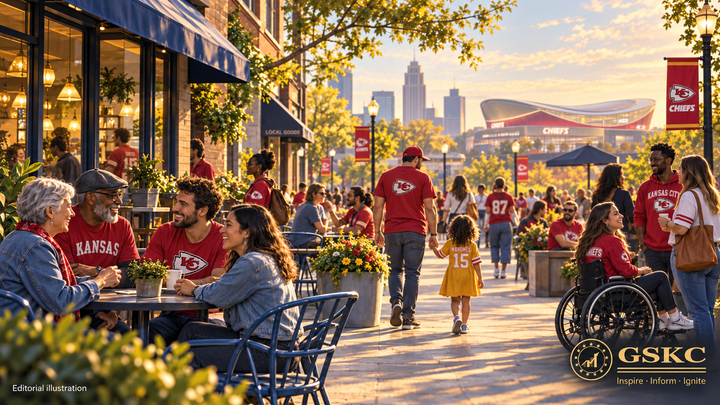
The developers describe a destination that would draw activity throughout the year. The stadium would provide major event days, while the surrounding uses would give people additional reasons to visit, gather, shop, or stay. That is the business concept behind combining sports facilities and real estate development. [5]
A restaurant district and a football stadium operate on different calendars. So do a hotel, an office, and a neighborhood gathering space. Looking at those calendars separately helps clarify the plan: the central question is how much activity each component can sustain between large events, and how the components connect.
The enclosed venue also creates the possibility of pursuing events such as a Super Bowl or Final Four, ambitions discussed when the move was announced. That is an opportunity to compete for bookings, rather than confirmation of an event schedule. [7]
For that reason, the eventual calendar will be more informative than a list of events a stadium could accommodate. The same distinction applies to the surrounding districts: proposed uses describe the vision; actual tenants, completed spaces, and regular visitors will describe the result.
The financial context—in brief
The published Kansas framework caps its stadium contribution at the lesser of 60% of the stadium budget or $1.8 billion. It also provides a separate, conditional schedule of support for related development. The public financing draws on designated tax revenues and the state’s sports fund. [6]
Those arrangements explain why construction cost and public cost require separate discussion. They also explain why the phrase “no new taxes” does not, by itself, describe the entire transaction. Revenue sources, repayment periods, and obligations matter alongside tax rates. Part II will examine those details.
What happens next—and what to watch
The project now has announced stadium concepts, design teams, and a master developer for the two districts. Those are identifiable planning milestones. The Chiefs describe the stadium images as initial concepts, with details continuing to be refined. [3][4][5]
The December framework also explicitly anticipates definitive agreements and says most of its terms are nonbinding until further agreement. It is evidence of the proposed structure, rather than proof that every later contract or financing step has been completed. [6]
As the project advances, residents can follow the official updates for changes in scope, construction timing, access plans, and the businesses proposed around the facilities. Readers comparing successive announcements should check whether a number refers to the stadium alone, the entire development, construction spending, or projected economic activity. Those measures answer different questions.
The community conversation will include both measurable effects and shared experiences. Traffic, employment, business opportunities, and public obligations can be examined with evidence. The meaning of a familiar gathering place—and the possibility of creating new memories—also helps explain why people care.
For now, the picture is clearer: a new home for games, a new workplace for the team, and two districts intended to extend activity beyond football. The next step is to follow the money: who contributes it, which revenues repay it, and what responsibilities remain over time.
Next: Who Pays for the Chiefs’ New Stadium?
— Matt Cucinotta | Growth Solutions KC | Inspire · Inform · Ignite
Source register
Primary project sources unless otherwise identified. Accessed September 8, 2026.
- [1] Kansas Department of Commerce: project announcement, December 22, 2025
- [2] Chiefs: updated project investment and impact projections, June 30, 2026
- [3] Chiefs: official concept renderings and stadium design, July 22, 2026
- [4] Chiefs: Olathe headquarters and practice facility, July 28, 2026
- [5] Chiefs: Two-Point Development announcement, August 31, 2026
- [6] Kansas: published STAR Bond Agreement, December 2025; pp. 1, 6, 18 and 22–23
- [7] Reuters: relocation background and Arrowhead transition, December 23, 2025
- [8] Chiefs: current stadium updates and official gallery


Comments ()