

The Next 250 Years
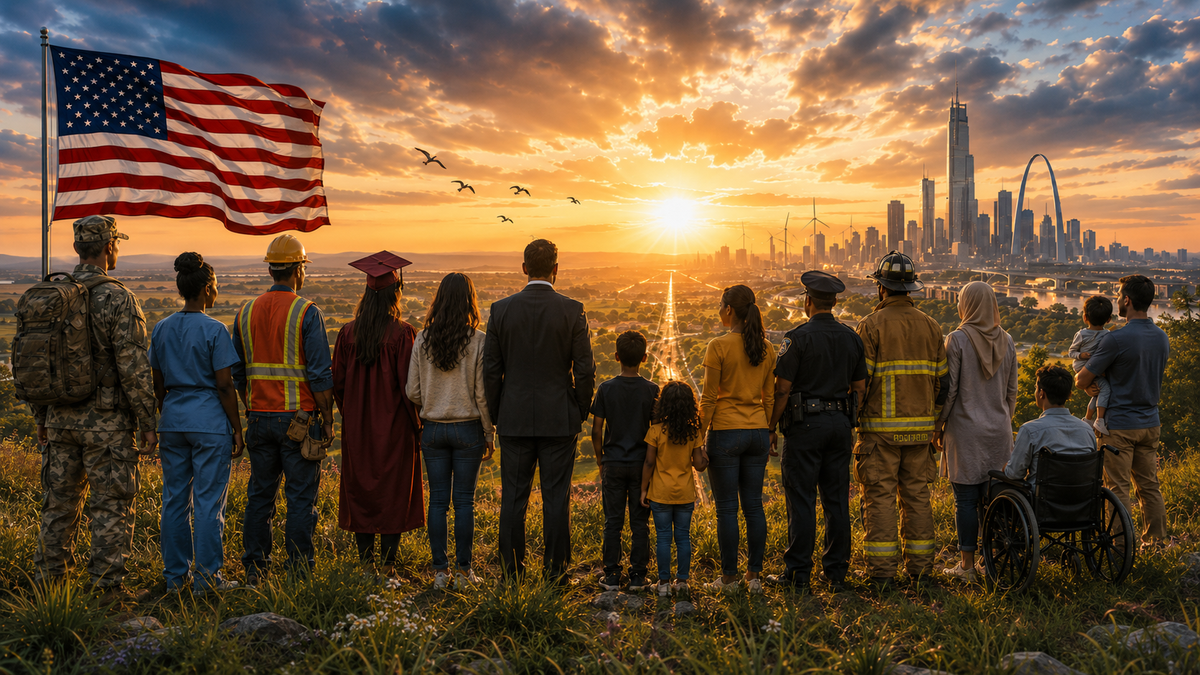
A Call to Renewal
America’s next 250 years will not be secured by nostalgia, grievance, technology, politics, or luck. They will be shaped by whether Americans recover the habits that made self-government possible: truth, responsibility, family, work, faith, civic trust, institutional stewardship, innovation with wisdom, and shared national purpose.
THE AMERICA AT 250 SERIES · ARTICLE TEN
The previous articles looked backward, then around. This one looks forward.
That is a dangerous thing to do, because the future has a way of embarrassing anyone who claims too much certainty about it. The world of 2276 will not look like the world of 2026. The next 250 years will bring technologies we cannot yet imagine, conflicts we cannot yet name, discoveries we cannot yet measure, and challenges that will make some of today’s arguments look small.
So this article will not pretend to predict the future.
It will ask a more important question: what kind of people will be capable of building it?
That is the question beneath every serious conversation about America’s next chapter. Nations do not survive merely because they are rich. They do not renew themselves automatically because their history is impressive. They do not remain free because earlier generations once sacrificed, innovated, governed, fought, debated, built, and believed.
The next 250 years will not be secured by government alone. They will not be secured by leaders alone. They will not be secured by institutions alone. All of those matter, but none can carry the weight by themselves. The next chapter depends on whether citizens choose renewal.
Decline is not inevitable. Renewal is not automatic. The future will be built by choices.
The Future Is Not Guaranteed
Americans have often lived with a quiet assumption that the future belongs to us.
It is understandable. For much of the last century, America seemed to possess an almost unique capacity to absorb crisis, adapt, and emerge stronger. The country survived civil war, depression, world war, social upheaval, terrorism, recession, technological disruption, and political turmoil. It built the world’s most powerful economy, produced wave after wave of innovation, defended liberty abroad, expanded rights at home, and repeatedly corrected failures that earlier generations had left unresolved.
That record is real. It should inspire confidence.
But confidence is not the same as presumption.
The central lesson of this series is not that America always gets it right. It is that America has repeatedly found the capacity to correct, rebuild, and improve. That capacity is not magic. It depends on habits, institutions, virtues, and choices. It depends on whether a self-governing people remains capable of self-government.
A Republic Cannot be Sustained by Spectators
It requires citizens who can tell the truth, accept responsibility, debate without hatred, work without resentment, build families and communities, steward institutions, honor sacrifice, and keep faith with principles larger than the moment.
The next 250 years will test whether those habits still live deeply enough in us.
The threats are not hard to name. Fiscal pressure. Technological disruption. Institutional distrust. Cultural fragmentation. Global rivalry. Family breakdown. Civic isolation. Loss of shared truth. The temptation to trade liberty for comfort, responsibility for grievance, persuasion for outrage, and citizenship for performance.
These are real challenges.
But the future is not determined by challenges alone. It is determined by the character of the people who face them.
Renewal Is a Choice
The word renewal matters because it rejects two false stories at once.
The first false story is despair: the belief that decline is inevitable, that the country is too divided, too corrupt, too indebted, too cynical, too far gone. This story is emotionally powerful because it excuses responsibility. If decline is inevitable, then no one has to do the harder work of repair.
The second false story is complacency: the belief that America will be fine because America has always been fine. This story is comforting, but it is no more serious than despair. It treats the inheritance as self-maintaining, as though the republic were a machine that runs forever without maintenance, sacrifice, or moral effort.
Both stories are evasions.
Renewal is different. Renewal begins with honest assessment, but it refuses fatalism. It sees what is broken without denying what is strong. It admits the cost of repair without pretending repair is impossible. It understands that a country can be genuinely great and genuinely in need of growth and improvement at the same time.
That has been the American pattern from the beginning.
The Constitution was not a declaration that the work was finished. It was a framework for ordered liberty and self-correction. The phrase “a more perfect Union” does not describe a nation already perfected. It describes a people obligated to keep forming, improving, correcting, and preserving.
That obligation now belongs to us.
Renewal begins with truth. A nation that cannot tell the truth about itself and about what is real cannot improve. But truth must be more than accusation. It must be ordered toward responsible repair. Honesty that becomes cynicism does not renew. It corrodes. Honesty that becomes responsibility can rebuild.
Renewal also requires trust. Not blind trust. Not naive trust. Earned trust. The kind that grows when people keep promises, institutions accept accountability, leaders tell the truth, families hold together, communities solve problems, and citizens remember that opponents are still neighbors. Trust leads to what is genuinely Good.
And renewal requires shared purpose. A society can survive disagreement. It cannot survive the loss of any common object worth serving. Renewal creates order and beauty.
Technology Needs Wisdom

The frontiers are real. Start with what’s actually on the horizon, because it is genuinely extraordinary, and the discipline is to neither inflate it into science fiction nor wave it away.
The next 250 years will be shaped by extraordinary tools:
Artificial intelligence has crossed from research curiosity to a general-purpose force reshaping the economy in real time. Following electricity, the industrial revolution, the personal computer, the internet, and the smartphone — AI may be the next great technological revolution. According to the McKinsey Global Institute report Agents, robots, and us: Skill Partnerships in the Age of AI, AI agents and robots could generate roughly $2.9 trillion in annual U.S. economic value by 2030 in its midpoint scenario. But read the condition attached, because it is the whole point: that value is unlocked only if organizations prepare their people and redesign workflows, rather than individual tasks, around people, agents, and robots working together. The machine does not deliver the future on its own. People do, or they don’t.
Energy is where ambition meets physics. AI’s enormous electricity appetite — data-center demand is projected to roughly double by 2028 — is reviving American nuclear power. The major technology firms have collectively committed over $50 billion to nuclear projects, and small modular reactors, factory-built and deployable in a fraction of the time a conventional plant takes, are targeted for first units around 2030. One frontier solving another’s bottleneck. Whether it materializes depends on execution and capital discipline, not on the promise.
Space has entered a new golden age, built on a distinctly American public-private model: NASA provides vision, commercial partners build the hardware, and one company now conducts roughly five of every six U.S. launches. The Artemis program targets a return to the Moon and, beyond it, a path to Mars. It is also, again, a genuine race — a strategic rival openly targets the same milestones on a similar timeline.
These are the kinds of opportunities that come along rarely in a nation’s life. But notice the pattern running underneath all three: in every case, the decisive variable is not the technology. It is the human choice about how to develop, govern, and deploy it.
Artificial intelligence, advanced medicine, energy innovation, biotechnology, robotics, space technology, quantum computing, new manufacturing systems, and inventions not yet imagined will alter how Americans work, learn, build, defend, heal, communicate, and govern.
That should excite us.
America has always been a nation unusually capable of turning discovery into daily life. The telegraph, telephone, light bulb, airplane, automobile, microchip, internet, smartphone, and artificial intelligence all belong to a larger pattern: a system that links ideas, capital, experimentation, education, enterprise, and scale.
Innovation is one of America’s great gifts.
But technology is not wisdom.
A society can become more powerful without becoming better. It can become more efficient without becoming more humane. It can gain information while losing judgment. It can build extraordinary tools and then use them for shallow, destructive, or dehumanizing purposes.
The future will be shaped not only by what America can build, but by whether America remains wise enough to use what it builds.
That is why the next technological age must be guided by principles older than the technology itself: truth, human dignity, responsibility, liberty, accountability, and the common good. Tools should serve people, not replace them. Markets should reward innovation, but a healthy society must still ask whether innovation strengthens families, communities, work, education, and human flourishing.
We should not fear the future. Fear is too small a response for a nation built on courage and invention.
But neither should we worship the future. Change is not good merely because it is new. Change is good when it helps human beings live more truthfully, freely, responsibly, and fully.
The task is not to retreat from the future. It is to shape it wisely.
Institutions Need Stewardship
America’s institutions are strained. That much is obvious.
Government, schools, universities, media, churches, courts, corporations, civic associations, and even families face forms of distrust, fragmentation, and pressure that cannot be solved by slogans. Some of that distrust has been earned. Institutions that fail, conceal, politicize, or condescend should expect skepticism.
But there is a difference between demanding better from institutions and teaching ourselves to despise the idea of institutions altogether.
A free society cannot function without institutions. Rights need courts. Communities need schools. Liberty needs laws. Markets need rules. Families need cultural support. The vulnerable need networks of care. Citizens need places to gather, deliberate, worship, volunteer, learn, serve, and belong.
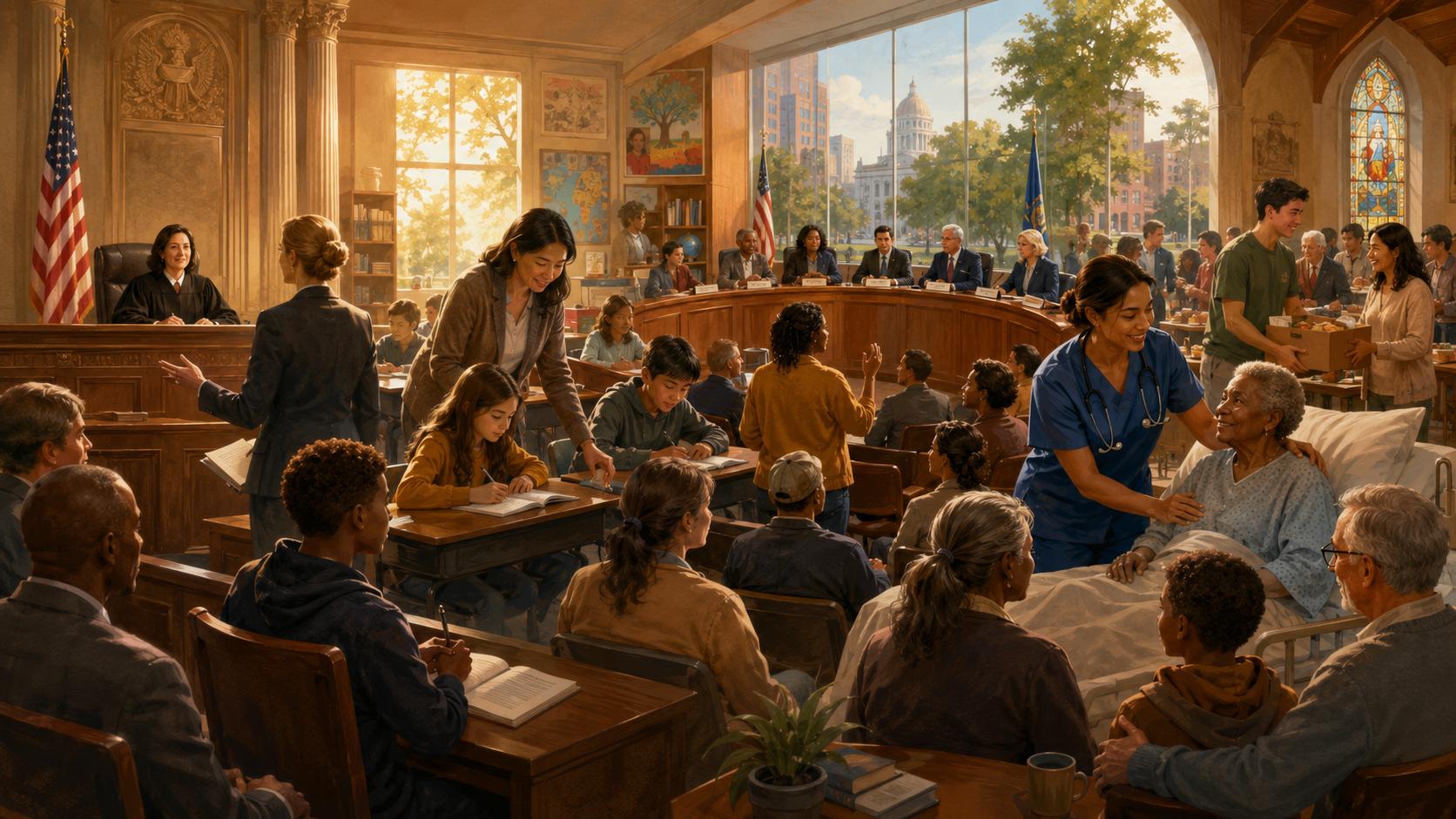
Institutions are not perfect because people are not perfect. But healthy institutions carry memory, transmit standards, organize effort, restrain power, and make cooperation possible across time.
The next 250 years will require institutional reform, but also institutional stewardship.
That means accountability without nihilism. Reform without demolition. Skepticism without contempt. Courage to challenge what is broken and humility to preserve what still works.
The Constitution itself teaches this posture. It is durable because it is neither fragile nor reckless. It can be amended, but not casually. It can correct, but not impulsively. It assumes human beings need structure because liberty without order does not remain liberty for long.
The same principle applies more broadly.
If Americans want trustworthy institutions, we must become the kind of people who build them, serve them, reform them, and hold them accountable without destroying the social trust they require to function.
A nation cannot renew what it only mocks.
The Republic Is Rebuilt Locally
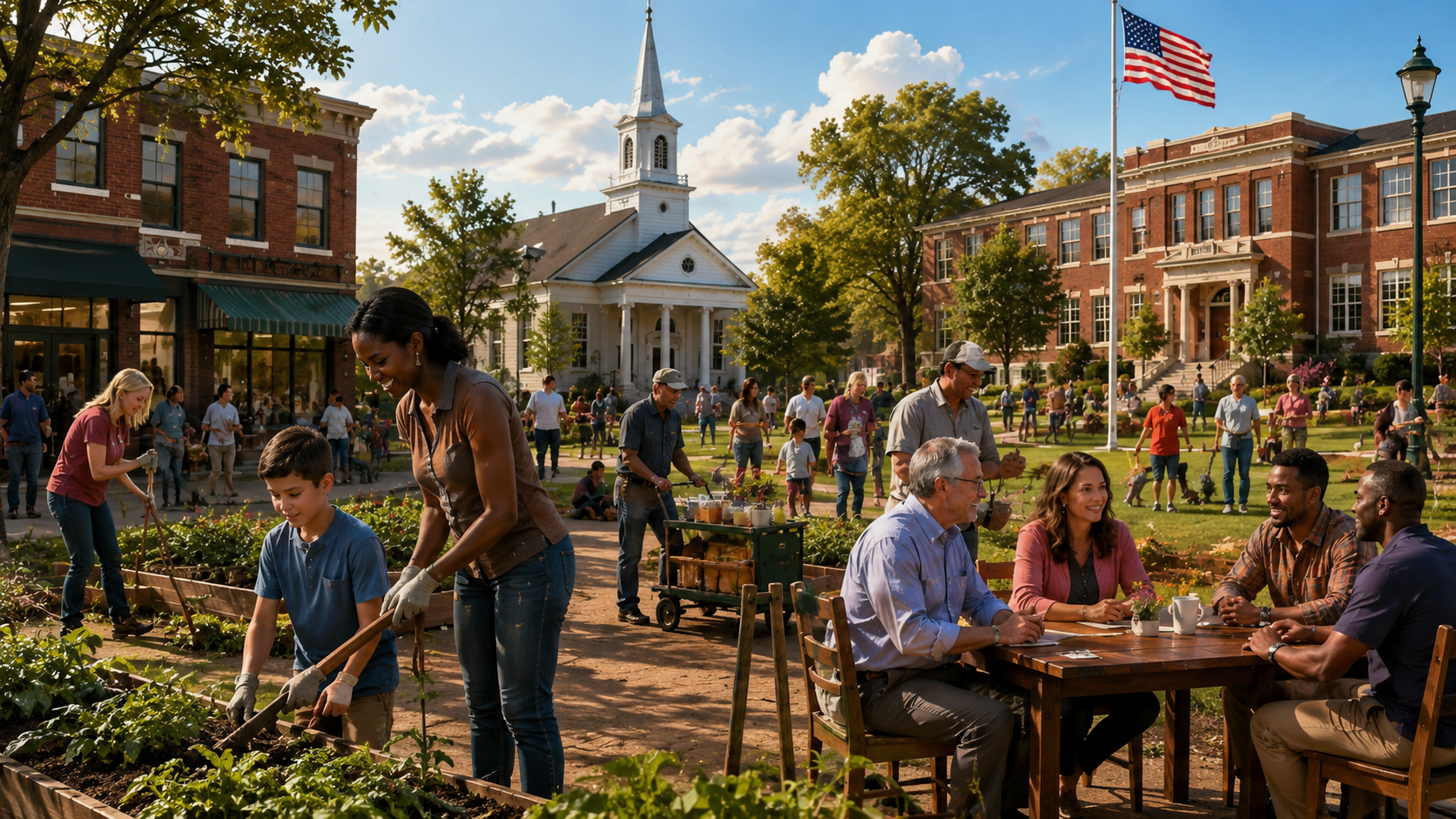
National renewal sounds grand, but it usually begins small.
It begins in homes where children are taught responsibility, gratitude, discipline, faith, courage, and respect.
It begins in marriages and families that keep promises.
It begins in classrooms where truth matters more than fashion.
It begins in churches and civic organizations where people learn service.
It begins in small businesses where work, risk, trust, and enterprise become daily practice.
It begins in neighborhoods where people know one another well enough to help before they judge.
The republic is rebuilt locally before it is restored nationally.
That may sound too modest for the scale of the challenges America faces. It is not. It is the only scale at which civic renewal becomes real.
Strong individuals form strong families. Strong families form strong communities. Strong communities form strong institutions. Strong institutions sustain a strong nation.
The order matters.
No national program can substitute for the habits formed in ordinary life. No election can repair what families, schools, churches, neighborhoods, and communities abandon. Politics matters, but politics is downstream from culture, character, and trust.
A country of isolated individuals will demand more from government because it expects less from itself.
A country of strong citizens, families, and communities can ask government to do what government should do, while preserving the deeper forms of responsibility that no state can manufacture.
This is where renewal becomes practical. Mentor a young person. Strengthen your family. Serve your church or community. Support local institutions that still do good work. Build something. Teach something. Volunteer. Start the business. Coach the team. Attend the meeting. Tell the truth. Refuse contempt. Repair what is within reach.
The next 250 years begin closer than we think.
Patriotism as Responsibility
Patriotism is often treated as a feeling: pride, gratitude, affection, reverence, belonging.
Those feelings matter. A nation cannot endure if its people feel nothing for it. Gratitude is a civic virtue. So is memory. So is the willingness to honor those who sacrificed for a country they would never live to see completed.
But patriotism at 250 must be more than sentiment.
It must become responsibility.
To love America well is not to pretend the country is flawless. This series has rejected that from the beginning. But neither is love of country compatible with fashionable contempt, permanent grievance, or the habit of seeing only failure. A mature patriotism tells the truth and still chooses commitment. It remembers what is good, corrects what is broken, and carries forward what must not be lost.
The patriotism America needs for the next 250 years is constructive.
It is proud without being blind. Honest without being cynical. Hopeful without being naive. It understands that freedom carries duties, that rights require responsibility, that opportunity must be preserved for the next person, and that self-government depends on the character of the self-governed.
This is where Article Nine’s argument returns with force. If America is exceptional because birth need not be destiny, then every generation must preserve the conditions that make that promise believable. That means defending liberty, honoring work, strengthening family, supporting education, protecting enterprise, preserving religious freedom, sustaining civil society, and keeping open the door through which the next person may rise.
The next 250 years will belong to citizens who understand that love of country is not merely a feeling to display, but a duty to practice.
We Are Ancestors Now
One of the most clarifying things a person can remember is that we are not only descendants.
We are becoming ancestors.
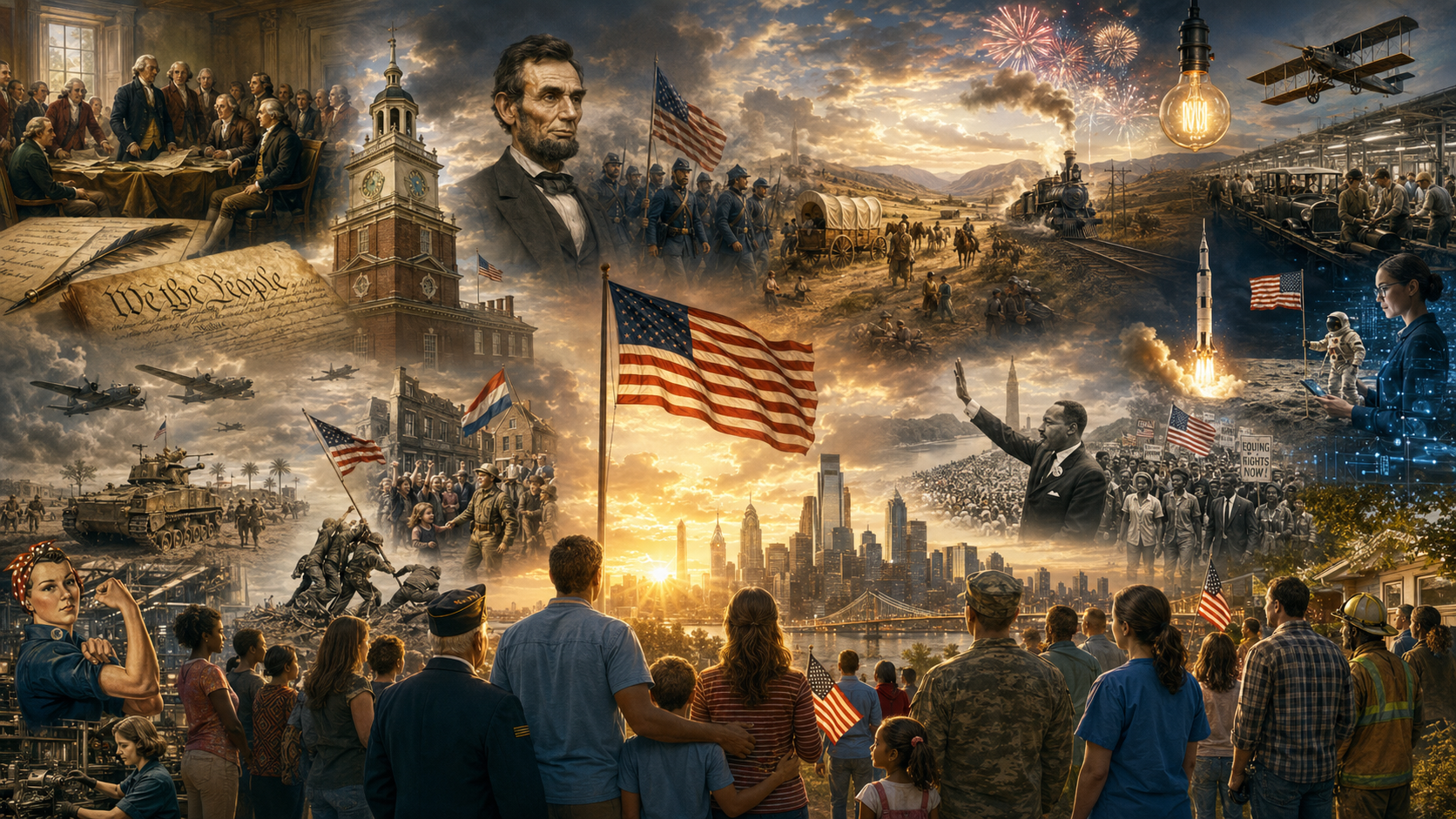
The Founders could not see us, but they shaped the world we inherited. The soldiers at Gettysburg could not know the America their sacrifice would preserve, but they preserved it. The immigrants who crossed oceans, the pioneers who built towns, the workers who built factories, the women who held families and industries together, the civil rights marchers who demanded America mean what it said, the inventors who turned imagination into industry, and the citizens who served quietly in local communities — all of them helped build a country for people they would never meet.
Now the question turns to us.
What will future Americans say of this generation?
Will they say we inherited a republic and treated it as an entitlement? That we consumed what others built, mocked what we did not understand, and surrendered to division because repair was too difficult?
Or will they say we saw the strain clearly and chose renewal anyway — that we chose what is True, Good, and Beautiful?
That we told the truth. Rebuilt trust. Strengthened families. Stewarded institutions. Used technology wisely. Preserved liberty. Practiced responsibility. Recovered shared purpose. And kept faith with the idea that America is not a finished achievement but an ongoing obligation.
The next 250 years will not be built by nostalgia. They will not be built by outrage. They will not be built by leaders alone, or parties alone, or institutions alone.
They will be built by citizens.
Citizens who understand that America is not merely something we inherit. It is something we must become worthy of inheriting. Something we must preserve, improve, and pass on.
That is the call of renewal.
Not to return to some imagined past. Not to deny the present. Not to wait for someone else to repair what belongs to all of us.
The call is to build.
To restore truth. To rebuild trust. To renew our nation. To form, again and again, a more perfect Union.
We are not only descendants. We are becoming ancestors.
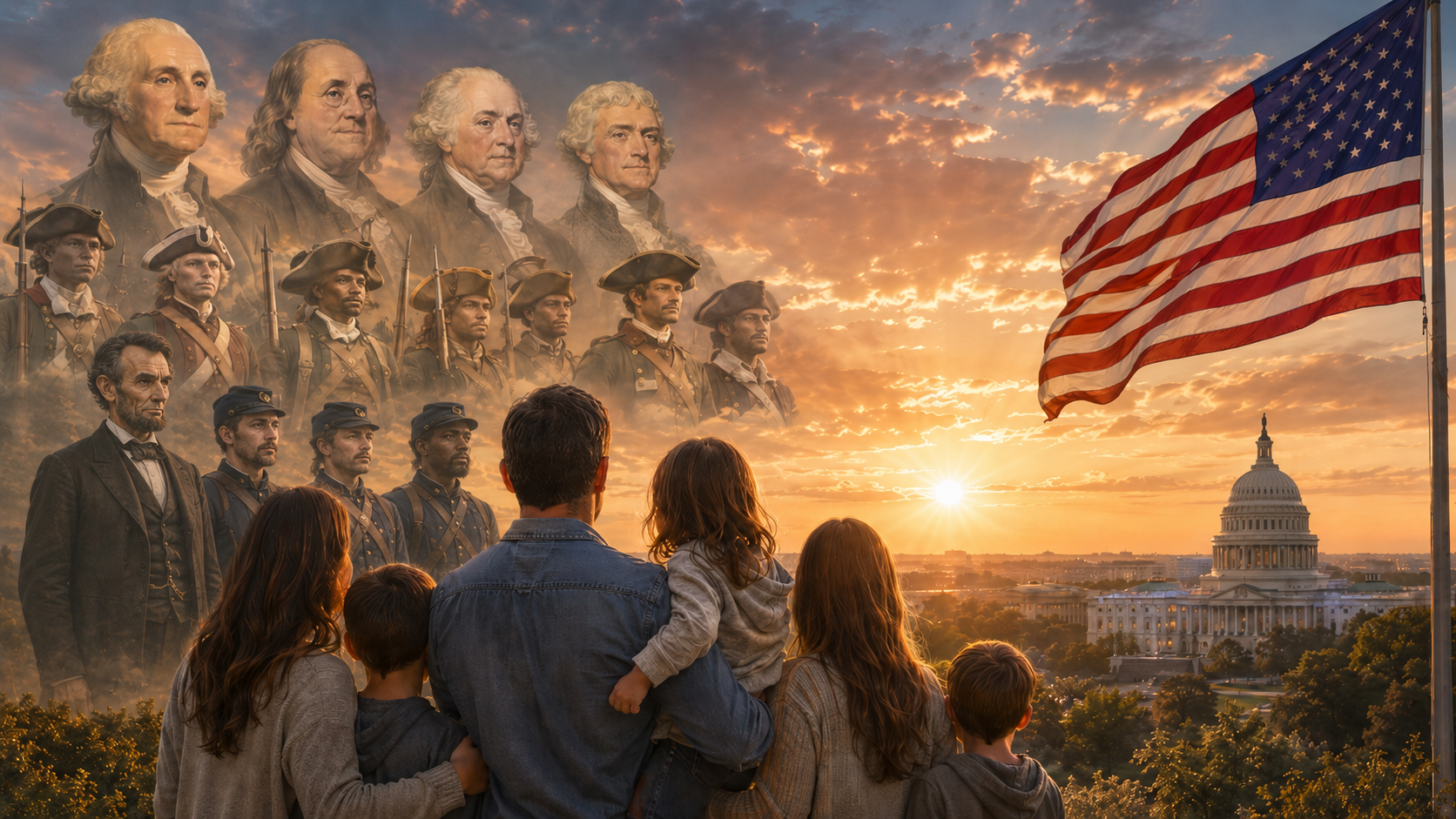
The next 250 years begin now.
The story of America isn’t finished. We are writing the next chapter.
This is the tenth article of the Growth Solutions KC America at 250 series.
Next: the final July 4th celebration installment — a closing reflection on gratitude, memory, sacrifice, renewal, and the enduring promise of America.
— Matt Cucinotta | Growth Solutions KC | Inspire · Inform · Ignite
Discover more installments of the America at 250 Series.


Comments ()