

The Meaning of Sacrifice: What the Greatest Generation Still Teaches Us
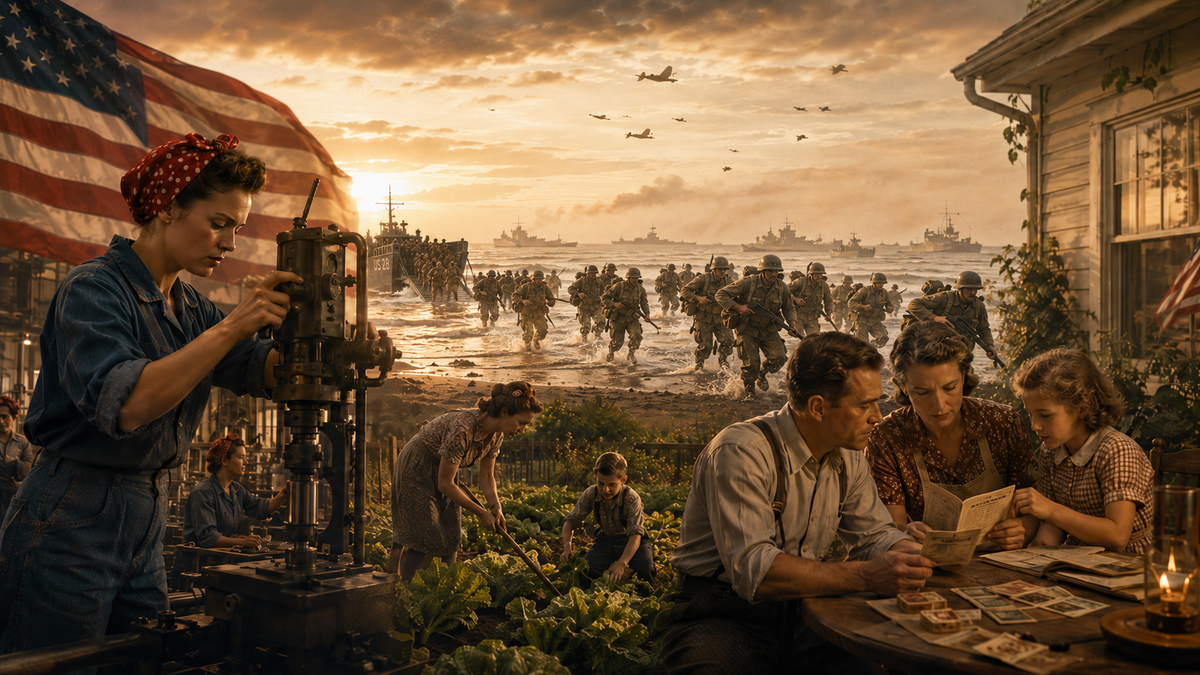
Sacrifice, unity, commitment, and nation before self are the lessons passed on.
AMERICA AT 250 SERIES · ARTICLE EIGHT
We remember the soldiers, and we should. But the deeper story of the Greatest Generation is not only what happened on the beaches of Normandy. It is what happened in the factories, the kitchens, the gardens, and the living rooms of an entire nation that decided, together, to do something hard.
This article comes at a particular moment in the calendar. Memorial Day has just passed; the Fourth of July is ahead. Between those two dates sits a question worth sitting with: what does it actually mean to sacrifice for something larger than yourself — and what happens to a nation when an entire generation does it at once?
The generation that came of age in the 1930s and 40s gives us the clearest answer in American history. They are remembered, rightly, for winning the Second World War. But the phrase “the Greatest Generation” was never only about the men who fought. It was about a whole society that rose, together, to meet a test that demanded something of everyone — and in doing so revealed what a people is capable of when it shares a purpose.
That is the part most worth understanding at 250, because it is the part we have most nearly forgotten how to do.
They Had Already Been Tested
Begin with what makes their achievement almost incomprehensible: they were not a generation that had been spared hardship and then asked to be brave once. They had already endured the worst economic catastrophe in the nation’s history.
The men and women who would build and win the war spent their childhoods and young adulthoods in the Great Depression — unemployment at 25%, breadlines, families losing everything, a decade of grinding scarcity that taught a whole cohort to expect little and endure much. They did not arrive at the 1940s rested and confident. They arrived having already learned, the hard way, how to go without, how to make do, and how to keep going when there was no guarantee things would improve.
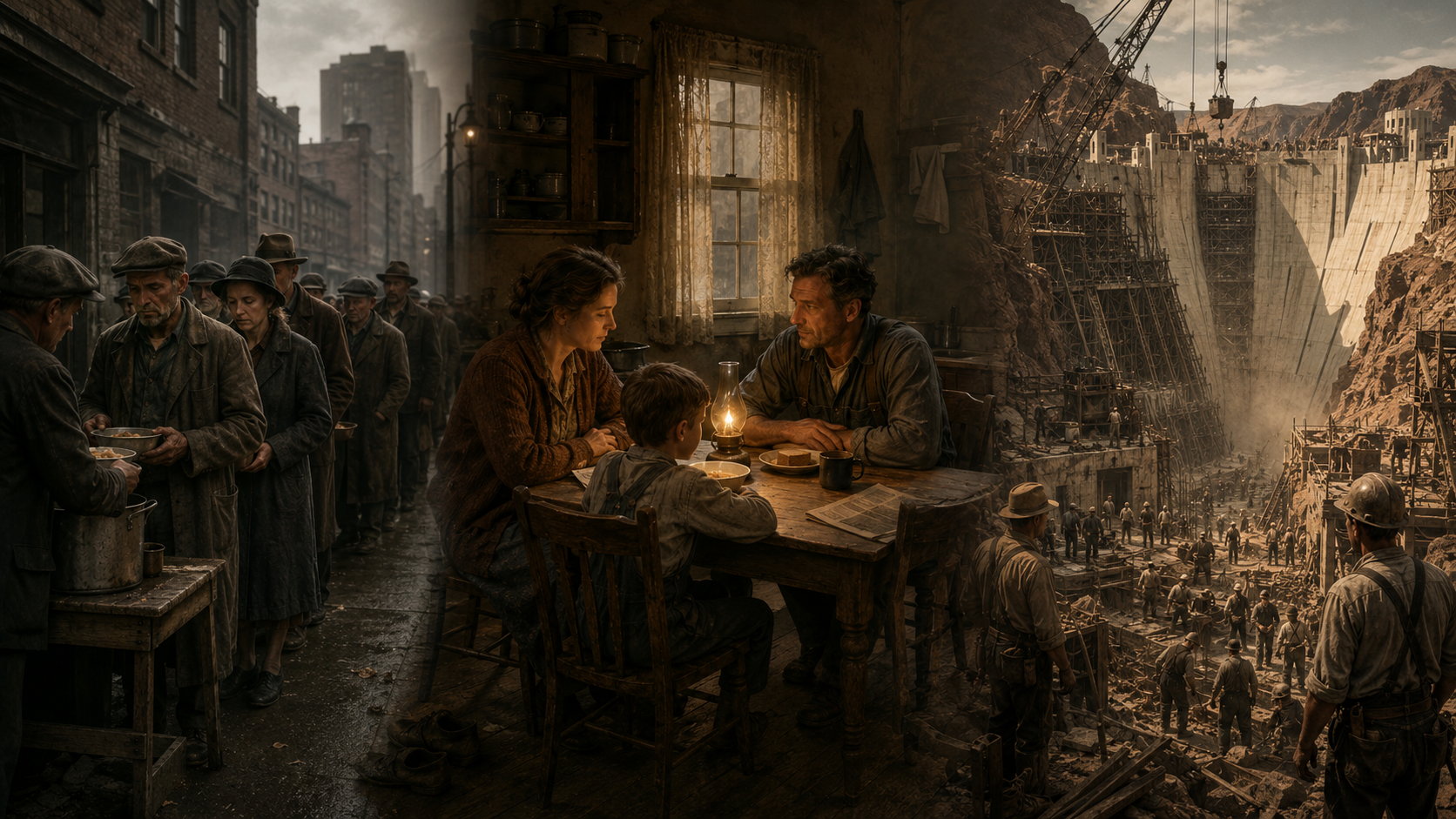
And then, having survived all that, they were asked to sacrifice again — this time for a war on the other side of two oceans. What is remarkable is not that they were strong. It is that a generation with every reason to feel the country owed them something instead answered, almost universally, that they owed something to the country. That inversion is the heart of the matter, and we will return to it.
The Whole Nation Went to War
Here is the fact that the soldier-centered memory obscures: in the Second World War, there was effectively no such thing as a civilian. The line between the front and the home front nearly disappeared because winning required the total mobilization of the entire society. The numbers are worth stating plainly, because they describe something almost impossible to imagine now.
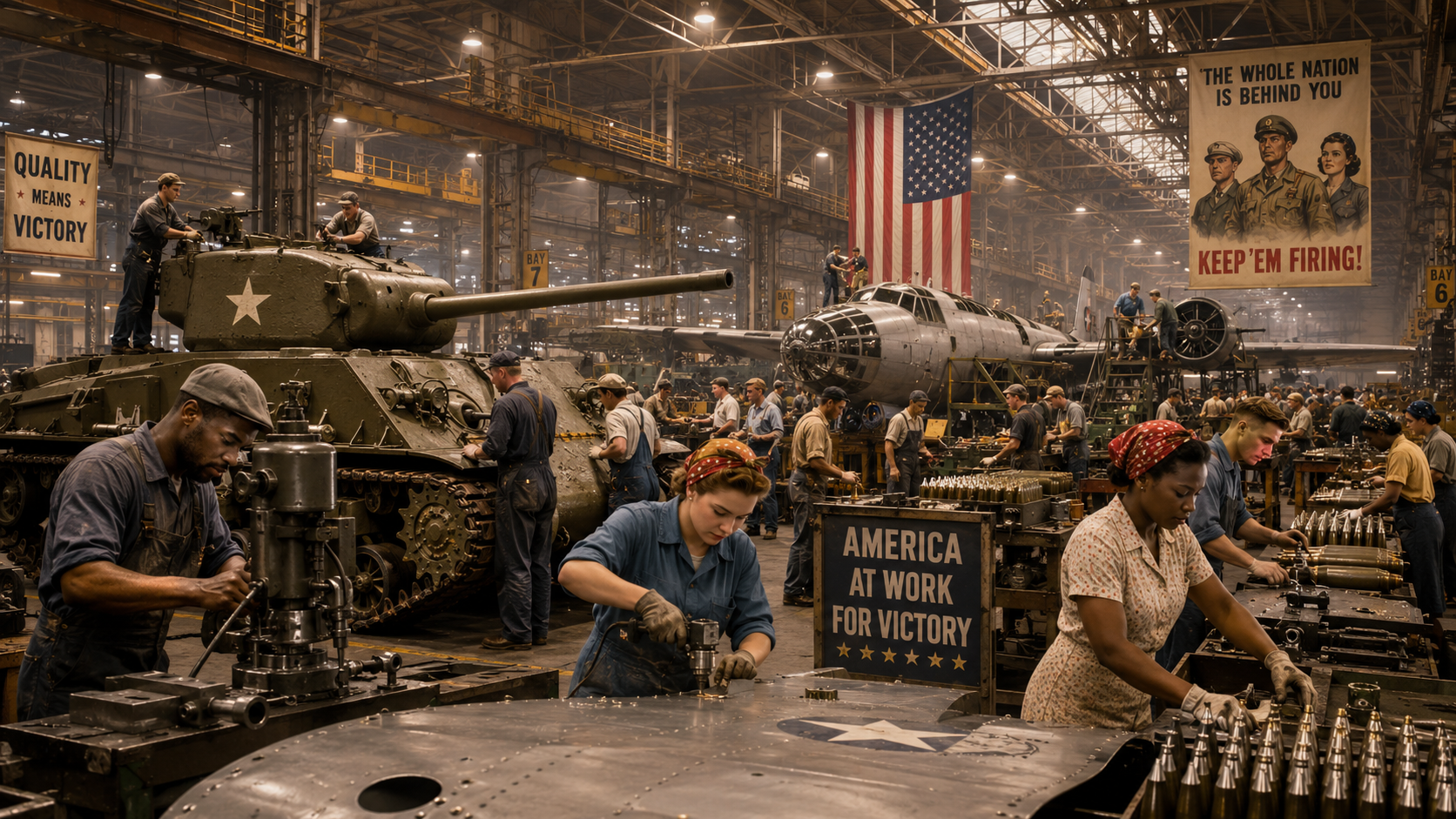
American industry converted itself, in a matter of months, into what Roosevelt called the “Arsenal of Democracy.” Factories that had built cars now built tanks and bombers, running three shifts a day, seven days a week. By the war’s end the country had produced nearly 300,000 aircraft, more than 86,000 tanks, and over 71,000 ships — at the peak, the United States was manufacturing almost as many munitions as all its allies and enemies combined. Real economic output grew by roughly 72% in five years. A factory in Michigan turned out a four-engine bomber nearly every hour.
But the production miracle was only possible because of who showed up to perform it. With sixteen million men in uniform, the workforce was rebuilt by everyone else. More than six million women entered the workforce — “Rosie the Riveter” was not one person but millions — until women made up over a third of the entire national workforce, doing skilled industrial labor a society had insisted, a year earlier, that they could not do. The total labor force expanded by nearly nineteen million people: women, teenagers pulled from school, the elderly drawn out of retirement, all of them showing up to build the machinery of victory.
And it reached past the factory gate into ordinary domestic life, in ways that now sound almost mythical. Some 21 million families — planting 7 million acres — grew “Victory Gardens” to feed themselves so commercial food could go to the troops.
Nearly 100,000 citizens volunteered, unpaid, to staff local rationing boards. Families accepted strict rationing of gasoline, meat, sugar, and rubber as a matter of course. Ordinary people poured their savings into war bonds. Farmers increased output by more than a third with ten percent fewer workers. Children collected scrap metal. Everyone, everywhere, was doing something.
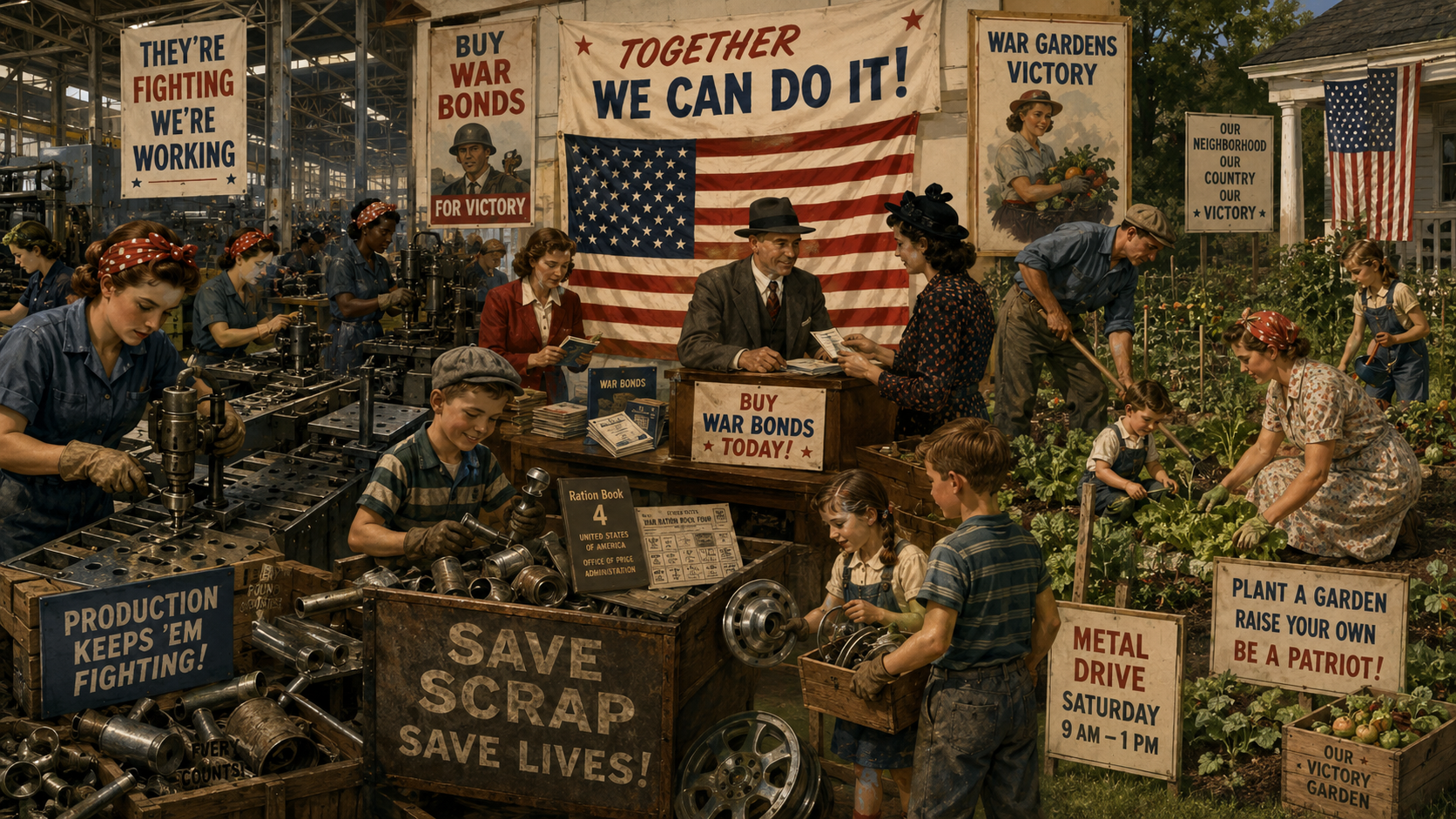
This is the image worth holding. In the Second World War, there was effectively no such thing as a civilian. The riveter and the rifleman were the same effort. The nation did not merely send an army to war. The nation went to war — all of it, together, each person contributing what they could to an outcome none could secure alone.
The Honest Part: The Unity Was Real, and It Was Incomplete
The series has earned its credibility by refusing to sand the edges off the American story, and this chapter is no exception. The shared national purpose of the war years was genuine and extraordinary — and it coexisted with real injustice that honesty requires naming.
Black Americans fought for freedoms abroad that they were denied at home, serving in a segregated military while their families faced Jim Crow — a contradiction so sharp that Black leaders named it directly, calling for a “Double V”: victory over fascism overseas and victory over racism at home. Japanese Americans, citizens by birth, were forced from their homes into internment camps by their own government even as their sons volunteered to fight for it. The unity was not perfect, and the people excluded from its full promise had the clearest possible grievance.
But notice what they did with that grievance — because it is the same pattern this entire series has traced. They did not, by and large, abandon the country. They served, contributed, and sacrificed, and then held America to account for the gap between its ideals and its conduct — laying the groundwork for the civil rights victories to come.
The imperfection of the wartime unity does not diminish the sacrifice. It deepens it. People who had every reason to withhold their full devotion gave it anyway, and then insisted the country become worthy of it.
What They Understood That We Have Forgotten
So what, exactly, can a modern American actually learn from them? Not nostalgia — nostalgia is useless. Something more specific and more demanding.
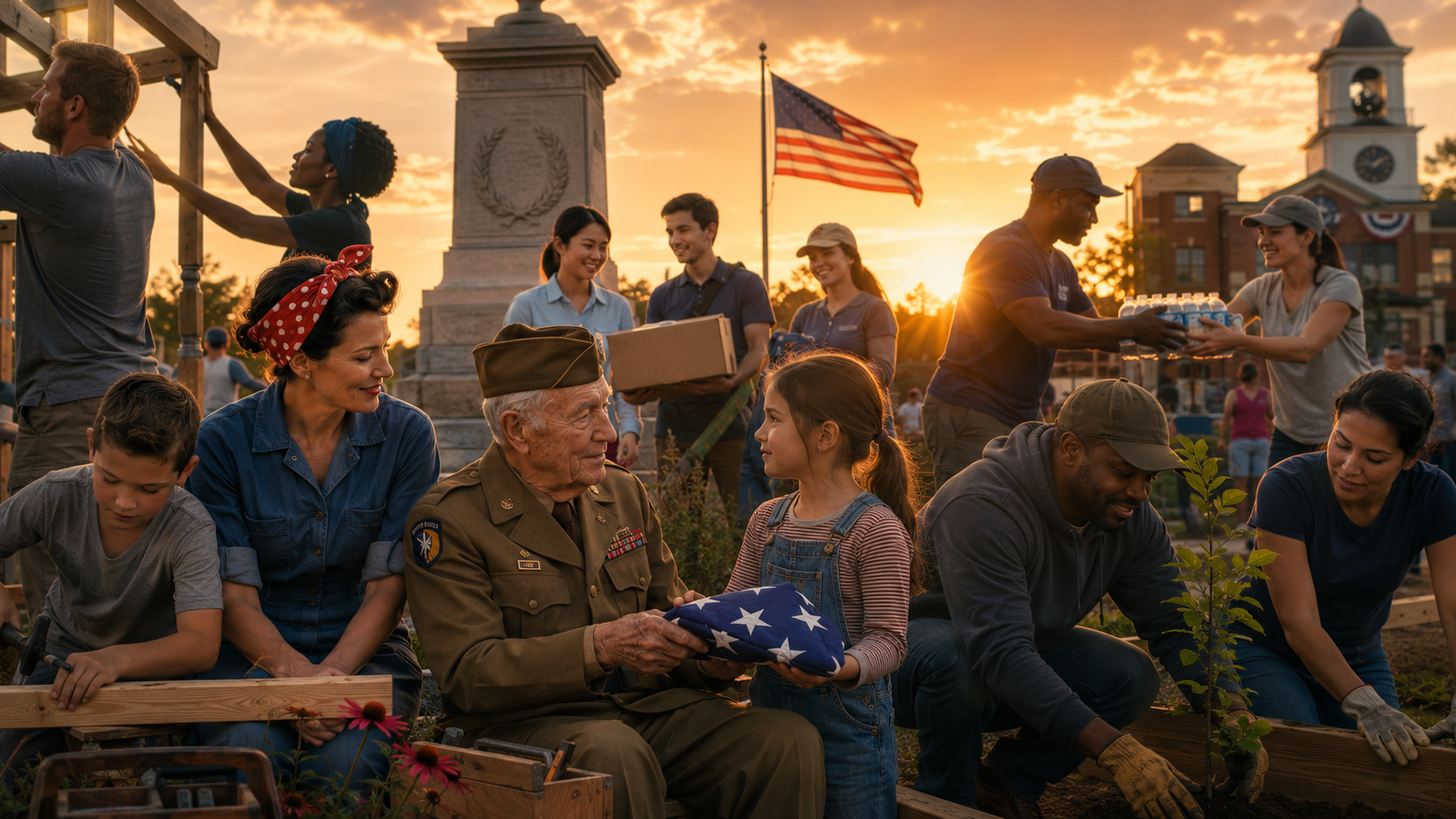
They understood that freedom is not free, and they understood it literally, not as a bumper sticker. Self-government, security, prosperity — these are not natural conditions that maintain themselves. They are achievements that must be paid for, generation after generation, in effort and sacrifice and the willingness to put a shared good ahead of immediate self-interest. The Greatest Generation knew this in their bones because the Depression and the war left them no room to pretend otherwise.
They understood that a nation is something you contribute to, not only something you receive from.
This is the inversion named earlier, and it is the single most countercultural thing about them now. We live in an age fluent in what the country owes us — rights, services, recognition, redress — and far less fluent in what we owe it. They were the reverse. A generation that had been handed economic catastrophe asked not what was owed to them but what was required of them. That orientation — citizenship as contribution rather than consumption — is the lesson most worth recovering.
And they understood that shared sacrifice creates something a society cannot manufacture any other way: solidarity. The reason that generation could trust its institutions and its neighbors at levels we can scarcely imagine today was, in part, that they had all paid into the same effort. They had a common project, common costs, and a common victory. The social trust this series has documented as badly frayed in our own time was, in theirs, the natural residue of having genuinely been in something together.
What This Asks of Us — and It Isn’t a War
Here the article must be careful, because the easy move is to wish for a crisis, and that is exactly the wrong lesson. The point is not that America needs another war to rediscover its unity. The point is far more useful: the Greatest Generation proved that the capacity for shared sacrifice and common purpose exists in the American character. It is not gone. It is simply unexercised.
That capacity does not require a world war to summon. It requires only the same orientation, applied to the ordinary work of citizenship. The habits that generation modeled are available to anyone, in any era: showing up for the shared project rather than only the private one; accepting some personal cost for a common good; treating fellow citizens as partners in a joint enterprise rather than obstacles or enemies; asking what a situation requires of you before asking what it owes you. None of that needs a battlefield. It needs only the decision to live as though the country is a thing we build together rather than a service we consume separately.
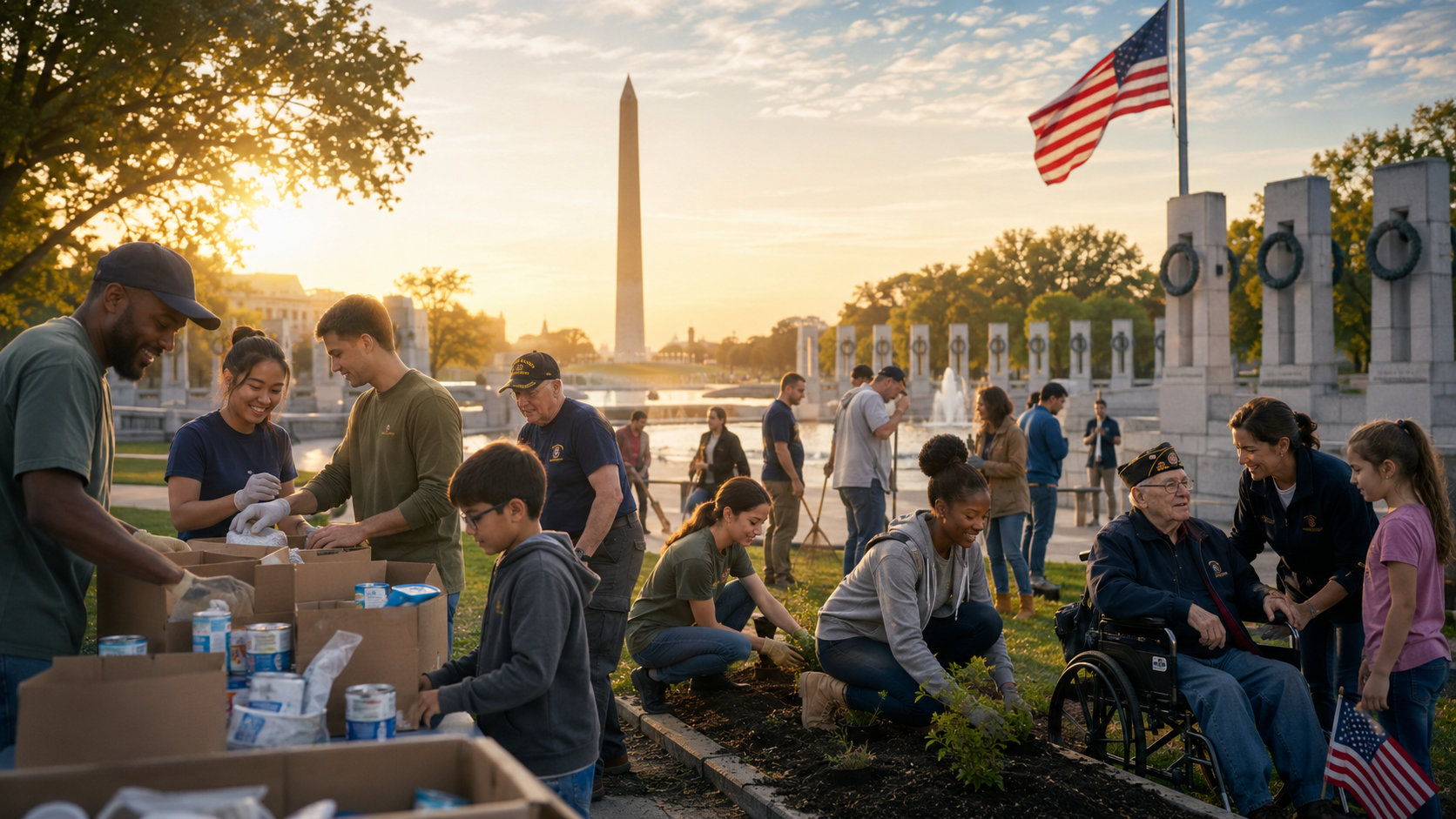
This is where the meaning of sacrifice becomes practical rather than ceremonial. To honor the Greatest Generation is not merely to lay a wreath and feel moved. It is to recognize where your life and community call you to serve something greater than yourself — and to answer that call.
Memorials matter, but the tribute they would most recognize is a generation choosing, once again, to live as they did: people who give before they ask.
The True, the Good, and the Beautiful
There is a reason this chapter sits where it does in a series anchored to the ideas of what is true, good, and beautiful.
The true: a free society is sustained only by the willingness of ordinary people to sacrifice for it — a fact the Greatest Generation demonstrated beyond argument. The good: that putting a shared purpose above private comfort is not a loss of self but the fullest expression of it, the moral core of citizenship. And the beautiful: there are few things in the human record more genuinely beautiful than an entire nation — flawed, divided, imperfect, and aware of it — choosing nonetheless to rise together and give everything for a future its members would not all live to see.
That is what the Greatest Generation left us. Not just a victory, and not just a memory, but a demonstration — proof, in the historical record, of what Americans are capable of when they remember that the country is something we owe ourselves to, together.
They have shown us it can be done. The only question is whether we will choose to do it again — not by repeating their war, but by recovering their sense of duty, sacrifice, and common purpose. We honor them not only with memory, but with behavior: by doing what is True, serving what is Good, and building what is Beautiful.
The story of America isn’t finished. We are writing the next chapter.
This is the eighth article of the Growth Solutions KC America at 250 series.
Next: Article Nine — What Makes America Exceptional? The Idea That a Person’s Birth Is Not Their Destiny.
— Matt Cucinotta | Growth Solutions KC | Inspire · Inform · Ignite
Discover more installments of the America at 250 Series.


Comments ()