

America Through Crisis: How the Union Survived
American exceptionalism is not a claim of national perfection, but a claim about opportunity, resilience, self-correction, and the repeated pursuit of improvement.
AMERICA AT 250 SERIES · ARTICLE THREE
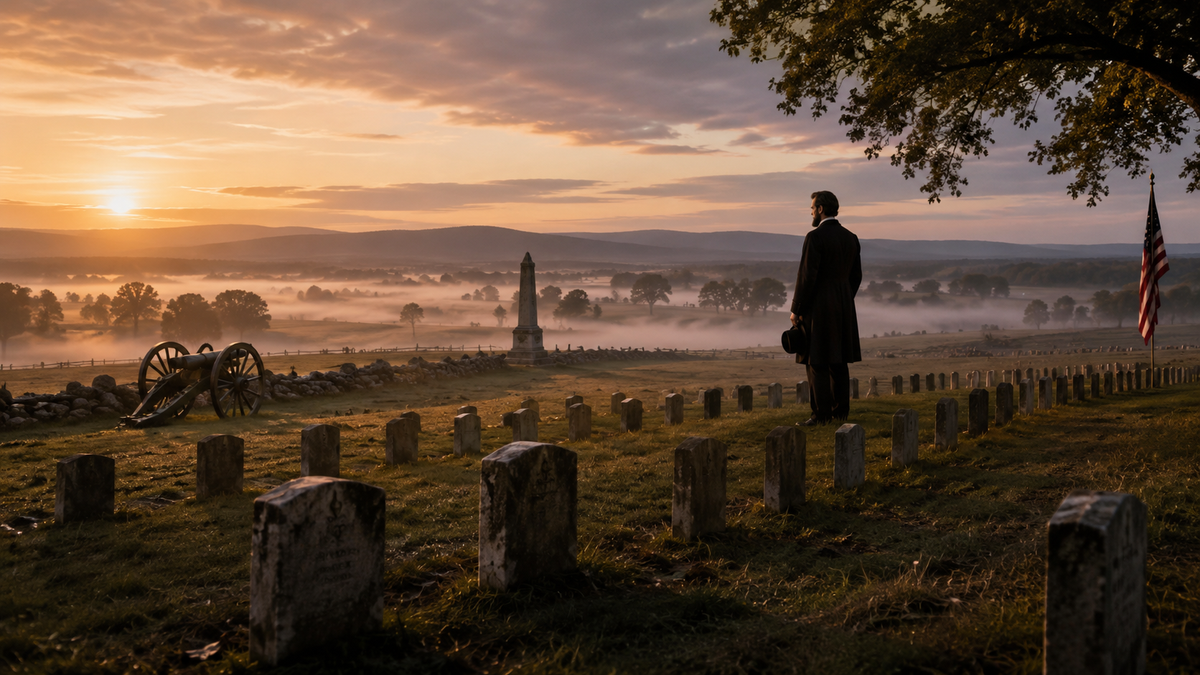
Eighty-seven years after the founding, the American experiment nearly ended — not at the hands of a foreign empire, but because of its own internal contradiction.
Article Two made a claim that would now be put to the hardest possible test. The Constitution endured, it argued, because it was built to be corrected — a repairable framework rather than a finished monument.
That sounds elegant on paper. But there is a difference between a design that corrects ordinary errors and one that can survive its gravest moral failure without tearing itself apart.
In 1861, America met that difference head-on.
The contradiction the founders had stitched into the constitutional order — a republic proclaiming liberty while protecting slavery — could not be quietly amended away. It came due all at once, in the deadliest war the nation has ever fought.
The question was no longer whether the American system could be improved.
It was whether it would exist at all.
Abraham Lincoln named the stakes precisely. The country was engaged in a great civil war, he said, testing whether that nation, or any nation so conceived and so dedicated, “can long endure.”
That word — testing — is the key to the American story.
The Union did not survive because its design was flawless. It survived because, at the moment of maximum strain, enough people chose to pay the price of holding it together and forcing it to mean what it had always said.
The Civil War was the supreme test. But it was not the only one.
Over 250 years, America has repeatedly faced moments when its institutions, economy, unity, security, and national confidence seemed on the verge of breaking. The threats changed. The country’s responses varied. Some were wise. Some were flawed. Some solved one problem while creating another.
Yet the pattern endured.
America’s history is not the story of a nation that never failed.
It is the story of a nation that repeatedly confronted failure, adapted under pressure, and found ways — often slowly, painfully, and incompletely — to move forward. America’s history is not one of perfection.
It is one of resilience and perpetual improvement.
The Flaw Comes Due
The compromise with slavery had been the founding’s original moral failure and its quiet time bomb.
For seven decades, the country managed the contradiction through temporary bargains — lines drawn on maps, balances struck between slave and free states, and political compromises that purchased time without resolving the underlying question.
By 1860, the bargains had run out.
When Abraham Lincoln won the presidency on a platform of halting slavery’s expansion, eleven Southern states chose secession rather than accept the result of a constitutional election.
That decision exposed the deepest possible question about the American experiment. If a state could simply leave whenever it lost a national election, then true constitutional self-government would not be binding. The Constitution would become a temporary arrangement honored only when every faction approved of the outcome. A republic that dissolves whenever one side loses a vote cannot remain a republic for long.
The war was about slavery. It was also about whether democratic self-government could survive a disagreement so profound that one section of the country preferred disunion to accepting the authority of an election.
Those were not separate questions.
They were the same crisis viewed from two directions: the moral contradiction of slavery and the constitutional question of whether the Union possessed the authority and legitimacy to endure.
The answer to both would be purchased at a cost almost impossible to absorb.
The Cost
At least 620,000 soldiers died in the Civil War, while more recent scholarship places the total closer to 750,000 or more. In a nation of approximately thirty-one million people, the equivalent loss today would run into the millions.
Entire towns lost their young men. Families were broken. Communities were emptied. Farms, cities, and landscapes were scarred for generations. It is worth refusing the temptation to make that suffering abstract.
The constitutional framework described in Article Two was not self-correcting in any painless or automatic sense. The correction of slavery required the bloodiest sacrifice in American history. When this series argues that America’s greatness lies partly in its capacity to confront and correct its failures, this is what that capacity sometimes costs.
The promise that all are created equal was not redeemed by argument alone. It was redeemed at Antietam and Gettysburg, at Shiloh and Vicksburg, and across hundreds of lesser-known fields by Americans who did not return home.
That truth should make us cautious whenever we speak casually about national renewal. Correction is possible. But delay makes correction more costly.
The founders deferred the contradiction. Later generations inherited the consequences.
The Armed Authors of Emancipation
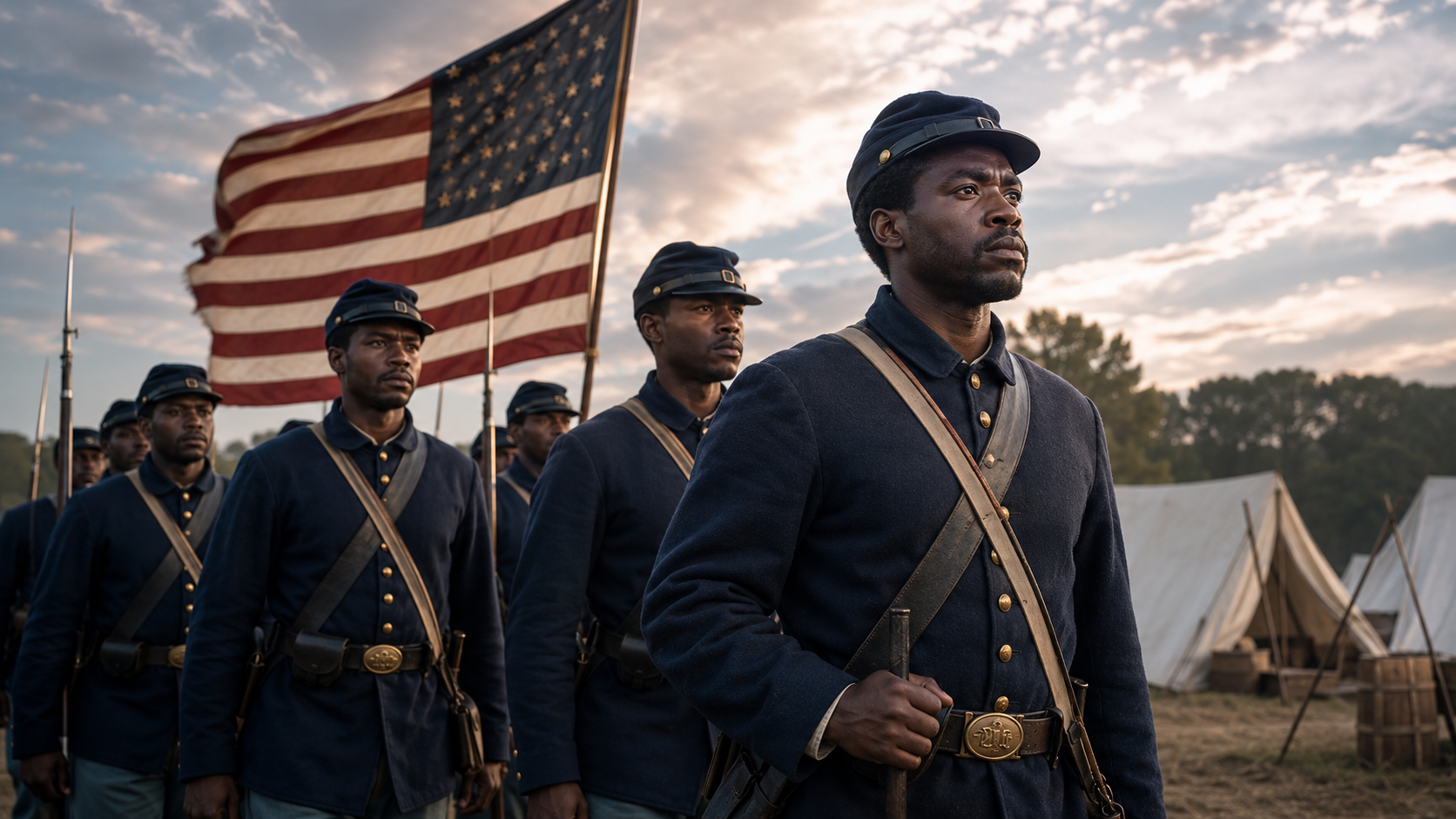
Among those who paid the price were approximately 179,000 Black men who served in the Union Army, joined by another 19,000 in the Navy — nearly 200,000 soldiers and sailors fighting for the Union and freedom.
Many had been enslaved. Others had lived under laws that denied their citizenship, restricted their rights, and questioned whether they belonged within the political community at all.
They were not passive beneficiaries of emancipation. They were among its armed authors. By serving, fighting, suffering, and dying for the Union, Black Americans forced the nation to confront a question it had avoided since the founding: how could a country deny citizenship to men willing to sacrifice their lives for its survival?
Their service changed the war. It strengthened the Union militarily, gave emancipation a human face, and transformed Black freedom from a distant political objective into a cause carried forward by the very people whose liberty had been withheld.
This continues one of the defining threads of the series. The Declaration’s argument repeatedly outran the men who first wrote it.
In Article One, abolitionists claimed the Liberty Bell’s inscription and used the nation’s own words to indict slavery.
In the Civil War, Black soldiers carried that argument onto the battlefield. The excluded did not merely wait for America to widen its promise. They helped compel it to do so.
What Lincoln Understood
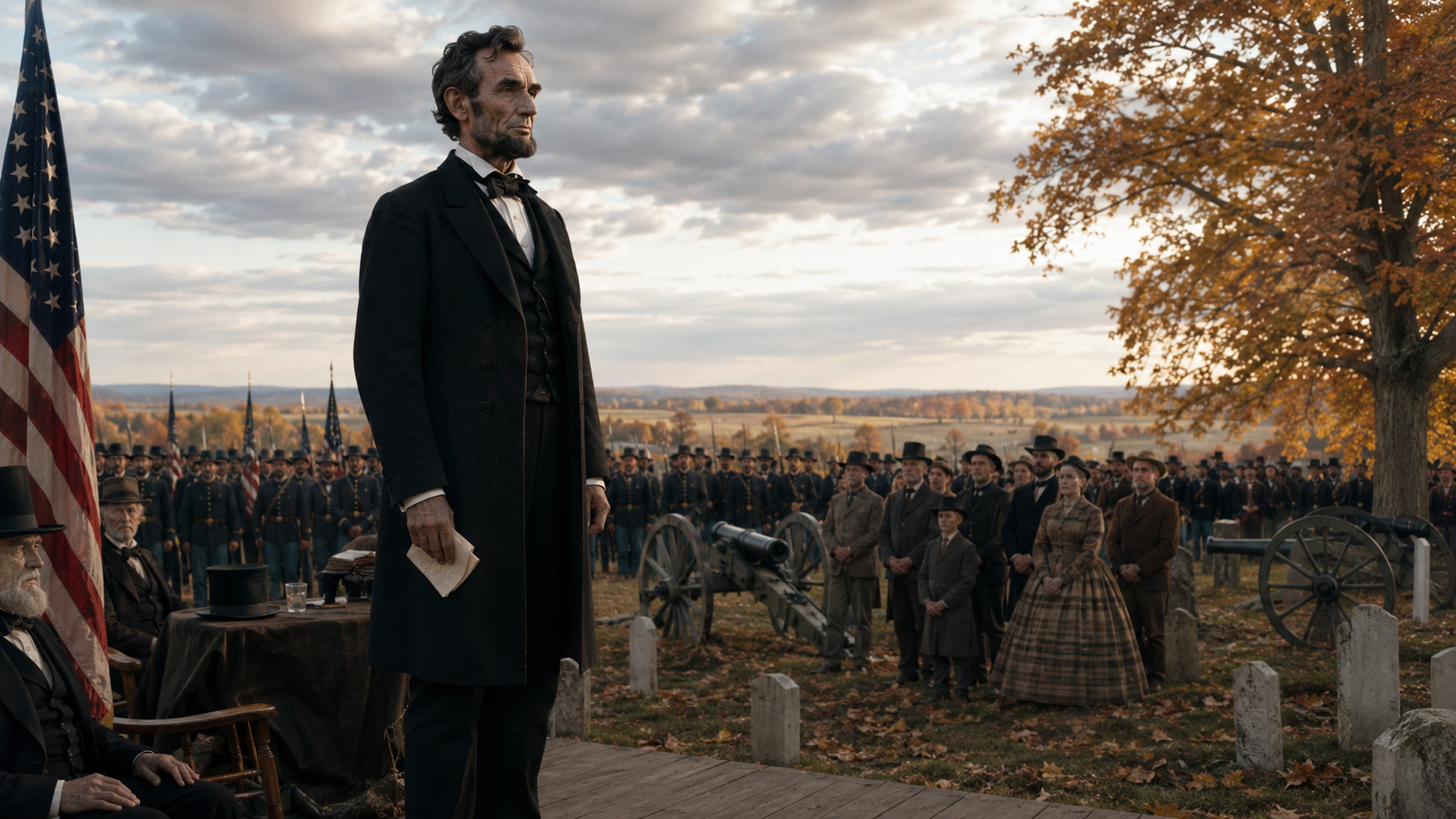
The genius of Lincoln’s leadership was that he refused to allow the war to remain merely a fight to restore the status quo. He reframed it as something larger: a test of whether the founding proposition itself could survive.
At Gettysburg, standing on ground where the war had turned, Lincoln did not offer a lengthy catalog of grievances or enemies. In barely more than two hundred and seventy words, he recast the conflict as a struggle over whether a nation “conceived in liberty” and dedicated to human equality could endure.
He called on the living to continue the unfinished work advanced by the dead. And he described the purpose of the sacrifice in a phrase that changed the meaning of the war:
A “new birth of freedom.”
That phrase is doing enormous work.
New birth — not restoration. Not return. Not the simple recreation of the Union as it had existed before the war.
Lincoln understood that the country emerging from the conflict could not be the same country that entered it. The old Union had tolerated and protected slavery. A renewed Union could not.
The war would preserve the nation geographically; its deeper purpose was to transform the nation morally and constitutionally. The United States would not simply survive. It would have to become more fully what it had claimed to be.
That is the central pattern of the American story: Crisis exposes the distance between principle and reality. Sacrifice creates the possibility of correction.
And each generation must decide whether it will use that possibility wisely.
The Repair, Written Into Law
Here is the strongest evidence that the constitutional framework held.
The Union preserved the constitutional order and amended it rather than discarding it for an entirely new regime.
The Thirteenth Amendment abolished slavery.
The Fourteenth Amendment established birthright citizenship and guaranteed due process and equal protection under the law.
The Fifteenth Amendment prohibited denying the right to vote based on race.
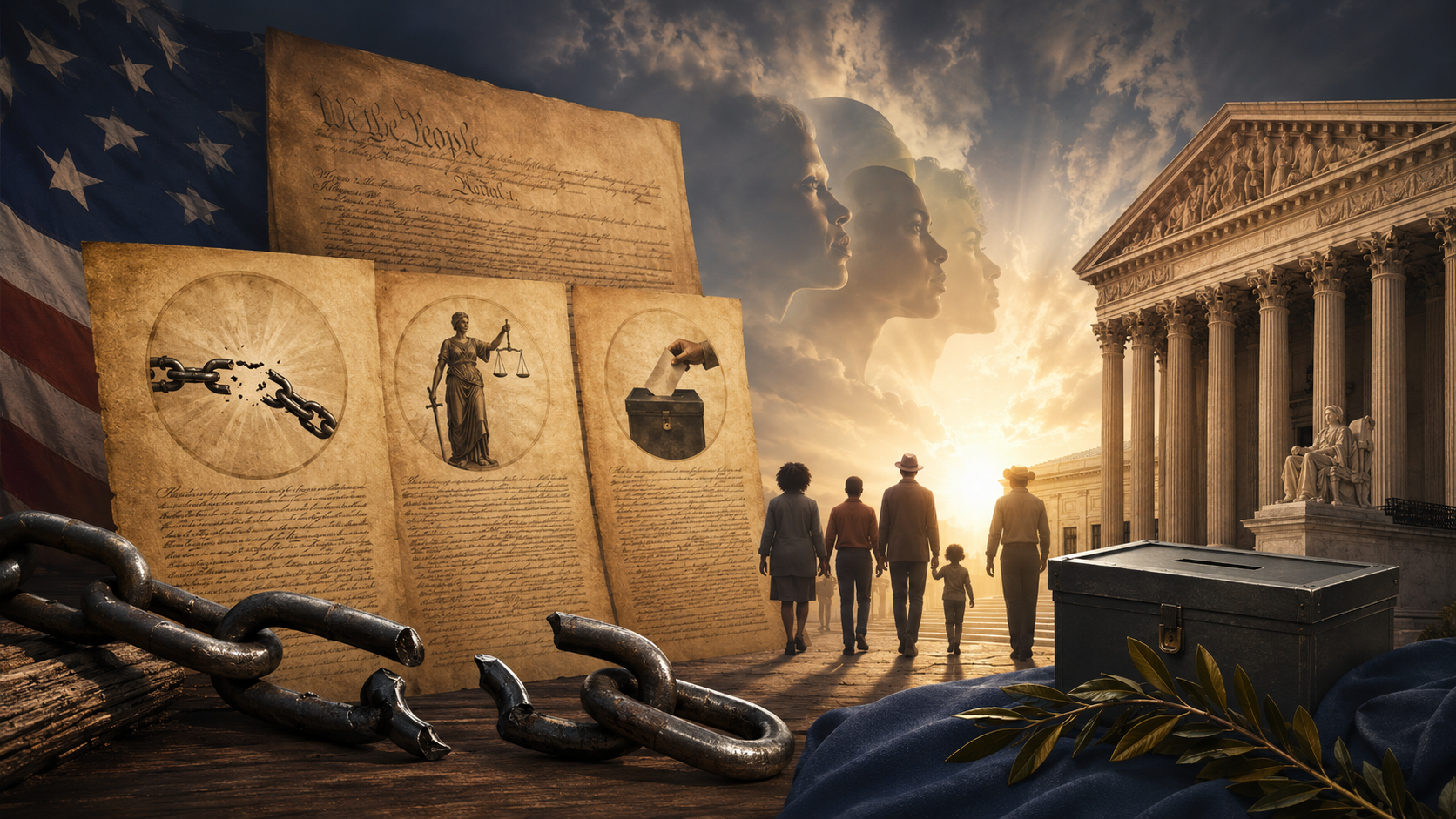
Together, the Reconstruction Amendments amount to what some historians have called a second founding. The Declaration had proclaimed human equality as a national principle. The Reconstruction Amendments began writing that principle into enforceable constitutional law.
The framework bent to accommodate a moral and constitutional revolution — and did not break. This matters because many nations confronted by a crisis of this magnitude replace one political order with another. Dynasties collapse. Constitutions disappear. New regimes purge the old and begin again.
The United States followed a different course.
The country fought a civil war, defeated a rebellion, abolished slavery, redefined citizenship, expanded the federal responsibility to protect individual rights, and did so through the Constitution’s own amendment mechanism.
That is why the Civil War remains the supreme test of Article Two’s argument. The system did not avoid failure. It contained a mechanism through which failure could be confronted and the governing order transformed without abandoning the republic itself.
The Honest Coda: Correction Is Not Completion
This series would betray its own standard if it stopped on a triumphant note.
The constitutional promises of Reconstruction were real. Its enforcement did not endure. Within a generation, white-supremacist resistance had hollowed out much of what the amendments guaranteed — through violence, intimidation, discriminatory laws, segregation, and systematic disenfranchisement.
The Fourteenth and Fifteenth Amendments were ratified in the late 1860s and 1870. Yet the nation did not begin enforcing many of its guarantees until the Civil Rights Movement nearly a century later.
The promise was written into law and then betrayed in practice. That is one of the most difficult truths in American history. But notice what that betrayal does not prove. It does not prove that constitutional correction was meaningless. It proves that correction in a republic is not a single event. It is a discipline each generation must renew.
The Reconstruction Amendments gave later generations constitutional ground on which to stand. The civil-rights leaders of the twentieth century did not have to invent the principle of equal citizenship. They had to demand that America finally honor what its Constitution already said.
The repair made during and after the Civil War was incomplete. It was not in vain. It became the legal and moral foundation upon which later progress depended.
This is why the pursuit of a more perfect union is never finished.
A reform can be enacted and then neglected. A right can be recognized and then denied. An institution can be repaired and later weakened.
Each generation inherits both the progress of those before it and the responsibility to preserve it.
Correction is not completion.
It is stewardship renewed.
The Pattern Repeated
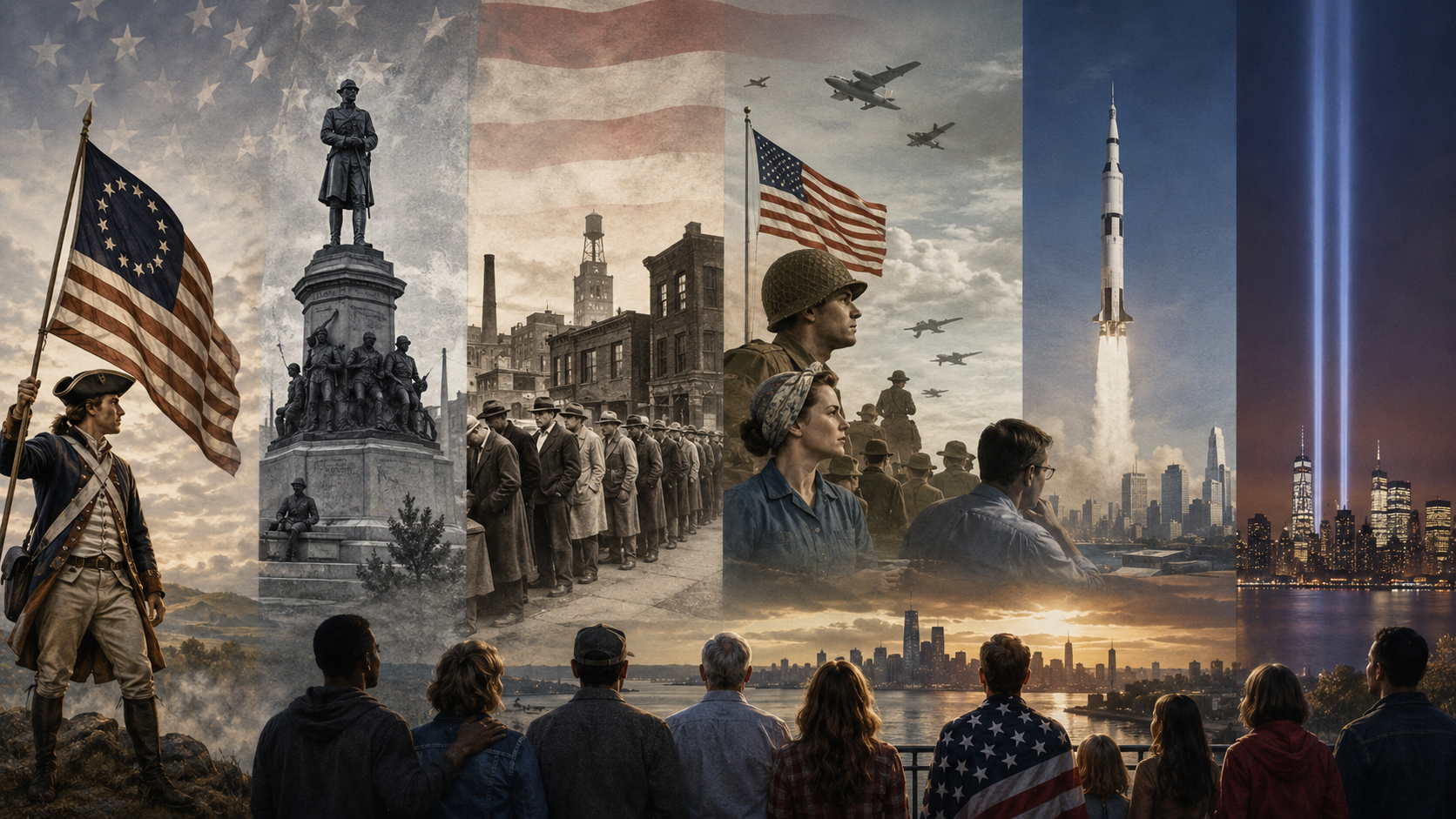
The Civil War was the nation’s supreme internal crisis, but it was part of a larger pattern. Across the American story, each major crisis tested a different part of the national experiment.
The Revolution tested whether the country could be born.
The Civil War tested whether it could remain united and become worthy of its founding promise.
The Great Depression tested whether democratic capitalism could survive economic collapse.
The World Wars tested whether a republic could mobilize on a global scale without permanently surrendering its character.
The Cold War tested endurance, strategic patience, and confidence under the shadow of nuclear destruction.
September 11 tested national security, unity, judgment, and the balance between liberty and protection.
Each crisis was different.
The underlying question remained familiar: Could the nation endure — and would it emerge wiser?
The Revolution: Creating Unity Under Pressure
The first crisis came before there was a Constitution or a United States government capable of acting as a nation.
Thirteen colonies with different economies, religious traditions, political cultures, and regional interests had to remain united long enough to defeat the most powerful empire in the world.
Independence was never inevitable.
The Continental Army endured defeats, shortages, unpaid wages, disease, desertion, and winters of severe deprivation. The states frequently placed local interests above the needs of the common cause. The revolutionary government struggled to raise money, supply troops, and sustain public confidence.
Victory required more than battlefield success. It required the creation of national purpose where no durable national identity had previously existed. The colonies learned to act as a people before they fully understood what kind of nation they would become.
That experience established the first pattern of American resilience: Unity often emerges not before a crisis, but through the shared work of surviving it.
The Revolution did not prove that Americans would always agree. It proved that they could cooperate across profound differences when the cause was larger than any single colony, faction, or interest.
The Great Depression: Adapting Without Abandoning Democracy
The Great Depression presented a different kind of existential threat.
Banks failed. Businesses closed. Families lost farms, homes, jobs, and savings. Unemployment approached one-quarter of the labor force, and public confidence in established institutions collapsed.
The danger was not merely economic.
Around the world, democratic governments were giving way to authoritarian movements promising order, certainty, and national revival. Fascism and communism offered competing answers to the apparent failure of liberal capitalism.
The United States faced the same pressures.
The American response remains debated, and rightly so. The New Deal expanded federal authority, created new regulatory institutions, established public-works programs, strengthened banking protections, and built social insurance systems that permanently changed the relationship between citizens, markets, and government.
Some measures were effective. Some were wasteful or constitutionally controversial. Some programs relieved suffering but did not, by themselves, end the Depression.
But the deeper point is institutional.
The American system adapted under enormous pressure without suspending elections, abolishing Congress, eliminating opposition parties, or replacing constitutional government with dictatorship.
The country changed substantially.
The republic endured.
The Depression demonstrated that resilience does not always mean restoring the old order exactly as it was. Sometimes survival requires institutional experimentation, public argument, policy correction, and a willingness to revise the relationship between government, markets, and citizens.
The response was imperfect. Yet it was also conducted within the constitutional system.
The World Wars: Mobilization, Sacrifice, and Contradiction
The world wars tested whether a continental republic could mobilize people, industry, capital, science, and national will on a global scale.
The Second World War was the greater test.
The United States converted factories from consumer production to military output, raised enormous armed forces, rationed essential goods, financed a global war, and fought across two oceans. Citizens planted victory gardens, bought war bonds, entered factories, served overseas, and accepted sacrifices that would be politically difficult to imagine in ordinary times.
The nation helped defeat fascist regimes built on conquest, racial supremacy, dictatorship, and contempt for individual liberty.
The achievement was extraordinary. Yet it was not without contradiction. The armed forces remained segregated. Japanese Americans were forcibly removed from their homes and placed in internment camps. Black veterans returned from fighting tyranny abroad to face discrimination at home. Women who had entered factories and transformed the wartime labor force were often expected to surrender those roles when peace returned.
Once again, crisis exposed the gap between American principles and American practice. And once again, the experience helped create pressure for later change.
The war accelerated demands for civil rights, expanded opportunities for women, strengthened the country’s industrial and scientific capacity, and left the United States with new global responsibilities.
Victory did not make America perfect. It changed what Americans believed the nation was capable of — and widened the argument over who should fully share in its promise.
The Cold War: Endurance Under the Nuclear Shadow
The Cold War was not a single emergency. It was a forty-year test of strategic patience.
The United States confronted a nuclear-armed ideological rival that challenged American interests and democratic institutions around the world. The competition unfolded through military alliances, economic assistance, intelligence operations, proxy wars, technological rivalry, diplomacy, scientific achievement, and the constant possibility of nuclear catastrophe.
Americans built bomb shelters, practiced civil-defense drills, fought in Korea and Vietnam, watched the Cuban Missile Crisis bring the world close to nuclear war, and entered a space race that became a contest over national confidence as much as technology.
The period produced extraordinary achievements. The United States built durable alliances, supported the reconstruction and defense of democratic nations, reached the moon, and eventually witnessed the collapse of the Soviet system without direct war between the superpowers.
It also produced serious failures. Fear fueled political excess. The Vietnam War damaged public trust. Intelligence operations and foreign interventions created long-term consequences that remain debated. Nuclear competition placed humanity under permanent risk.
The Cold War also intensified America’s internal moral reckoning. A nation presenting itself as the defender of freedom abroad could not indefinitely defend segregation at home. The contrast between American democratic ideals and racial discrimination weakened the country’s credibility and added pressure for civil rights reform. External competition and internal correction became connected.
America’s resilience during the Cold War rested not only on military strength, but on the ability to improve the society it claimed to represent.
September 11: Unity, Security, and Judgment
September 11, 2001, tested the country through sudden attack.
Nearly three thousand people were killed in a single morning. The images of burning towers, a damaged Pentagon, and a field in Pennsylvania entered the national memory instantly.
The immediate response revealed some of the best of the country. Firefighters, police officers, emergency personnel, military members, medical workers, and ordinary citizens acted with courage and selflessness. Communities gathered. Americans donated blood, supported grieving families, enlisted, volunteered, and rediscovered a sense of national solidarity that had seemed absent only days before.
But the years that followed also demonstrated that resilience is not the same as infallibility. Wars, intelligence failures, surveillance powers, detention policies, security measures, and institutional decisions produced consequences that Americans continue to examine.
Some actions were necessary. Others were mistaken, excessive, poorly designed, or sustained long after their original purpose had become unclear.
The lesson is not that the country should have failed to respond. It is that a resilient republic must examine its response as honestly as it remembers the attack.
National unity is valuable. Security is necessary. It does not eliminate the need for constitutional restraint. A free nation must be capable of defending itself without forgetting what it is defending.
What Resilience Really Means
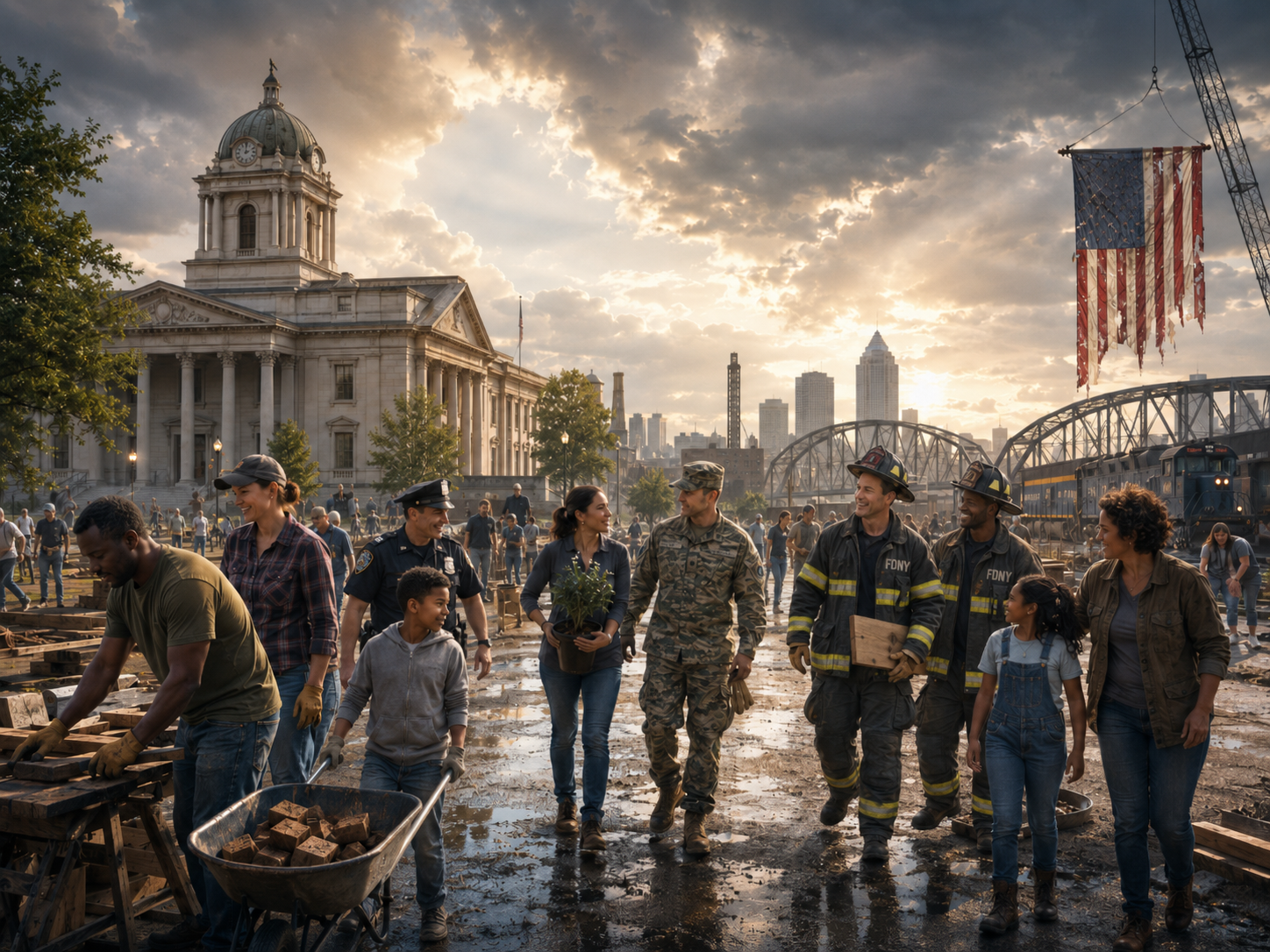
Across these crises, the threats changed.
The Revolution challenged the nation’s birth.
The Civil War challenged its unity and moral legitimacy.
The Great Depression challenged its economic order.
The World Wars challenged its capacity for mobilization and sacrifice.
The Cold War challenged its patience, confidence, and strategic judgment.
September 11 challenged its security and restraint.
The responses were never flawless. Some solved one problem while creating another. Some expanded freedom. Others compromised it. Some decisions look wiser in retrospect than others.
That is precisely the point. American resilience does not imply that the nation is perfect. It means the constitutional system leaves room for debate, revision, correction, and renewal.
Survival preserves a country as it was. Resilience allows a country to emerge changed.
That distinction matters.
A society can survive physically while losing the principles that once defined it.
A government can defeat an enemy while weakening its own legitimacy.
A nation can preserve institutions in name while allowing them to decay in practice.
Real resilience requires more than endurance. It requires learning. It requires the courage to acknowledge error without surrendering confidence in the nation’s capacity to improve. It requires institutions strong enough to act, constitutional limits strong enough to restrain that action, and citizens responsible enough to demand both. It requires wisdom.
This is the foundation for understanding American exceptionalism later in this series. America is not exceptional because it has avoided crisis. It has not. It is not exceptional because every response has been wise. Some were not.
Its distinction lies in the repeated capacity to confront crisis, preserve the constitutional order, debate the failures of its own response, and pursue correction without abandoning the national experiment.
Not a country that never falls.
A country that has, so far, retained the institutions and civic capacity to confront failure, correct course, and rise again.
That is not perfection. It is continual improvement under pressure.
And it is never guaranteed.
The Test Belongs to Every Generation
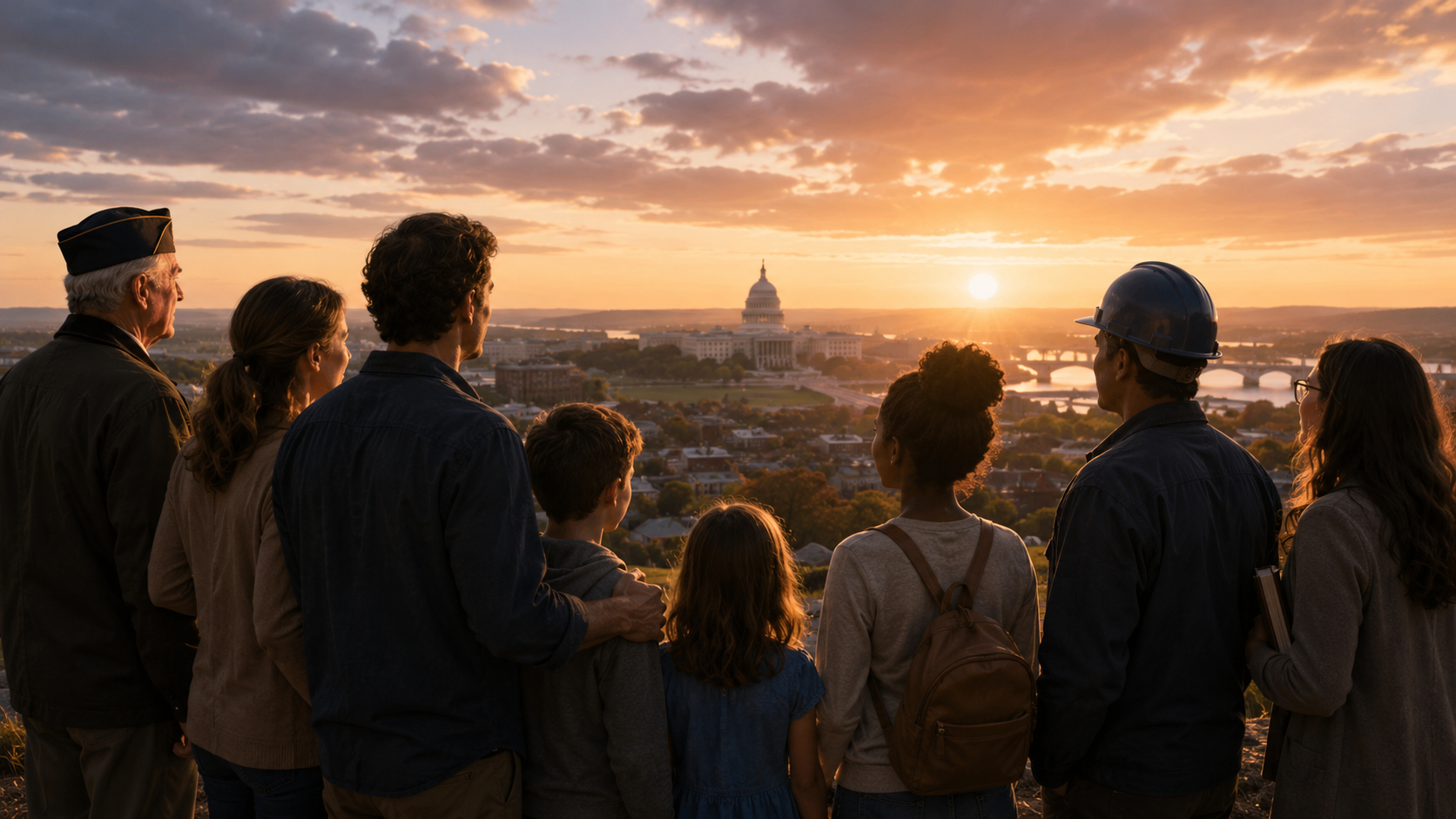
The Union survived its gravest test not because the founders had eliminated the possibility of failure. They had not.
It survived because they created a structure capable of repair — and because, when the moment came, a generation was willing to pay what the repair required.
The same principle carried forward through later crises. Institutions, leadership, sacrifice, public trust, and civic responsibility mattered. So did the willingness to examine mistakes after the immediate danger had passed.
This is the inheritance.
The constitutional machine works only as long as each generation understands that resilience is not automatic. Every generation receives institutions built by people before it. Every generation also receives unresolved contradictions, accumulated mistakes, neglected responsibilities, and new threats the founders could not have imagined.
The task is not to preserve every policy, institution, or habit exactly as inherited. Nor is it to discard the entire framework whenever it proves imperfect. The wisdom is to distinguish between what must be preserved and what must be improved.
That is the enduring discipline of a more perfect union.
Lincoln asked whether a nation so conceived could long endure. For 250 years, the answer has been yes. Not because endurance was guaranteed. Not because every generation responded perfectly. But because, when the nation was tested, enough Americans repeatedly chose to defend it, repair it, and carry its unfinished work forward.
The next test will not look exactly like the last. It never does. But the responsibility will be familiar.
Preserve what is good.
Correct what has failed.
Learn from the cost.
And leave the Union stronger than it was found.
The story of America is not finished. We are writing the next chapter.
This is the third article of the Growth Solutions KC America at 250 series.
Next: Article Four — Builders of a Nation: The Leaders Who Shaped the American Story.
— Matt Cucinotta | Growth Solutions KC | Inspire · Inform · Ignite

Discover more installments of the America at 250 Series.


Comments ()